
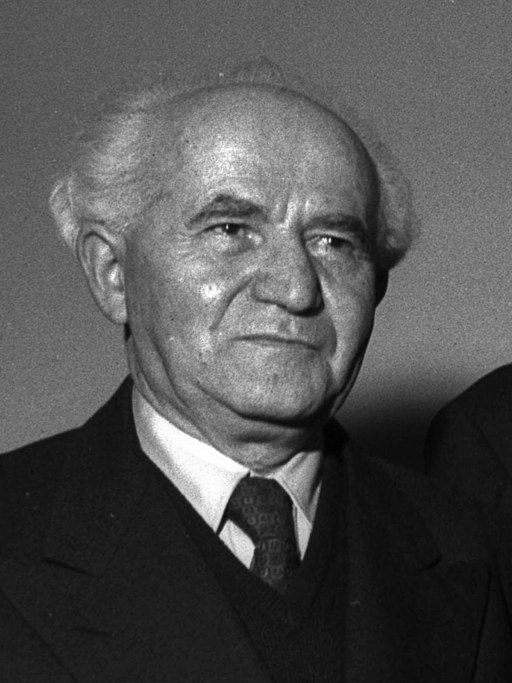
David Ben Gurion was the first person to proclaim a Jewish state in 2000 years on May 14, 1948. He was Chairman of the Jewish Agency, an organization established in 1929 with the aim to “ensure that every Jewish person feels an unbreakable bond to one another and to Israel no matter where they live in the world”. Ben Gurion also served as Israel’s first Prime Minister.
The Israeli-American Relationship
 David
Ben Gurion was the first person to proclaim a Jewish state in 2000 years on May 14,
1948. He was Chairman of the Jewish Agency, an organization established
in 1929 with the aim to “ensure that every Jewish person feels an unbreakable bond to one another and to Israel no matter
where they live in the world”. Ben Gurion also
served as Israel’s first Prime Minister.
David
Ben Gurion was the first person to proclaim a Jewish state in 2000 years on May 14,
1948. He was Chairman of the Jewish Agency, an organization established
in 1929 with the aim to “ensure that every Jewish person feels an unbreakable bond to one another and to Israel no matter
where they live in the world”. Ben Gurion also
served as Israel’s first Prime Minister.
Immediately
after the British withdrawal, fighting broke out between Arabs and Jews. Egypt
also invaded
Israel but, despite
all that, the Jews celebrated the birth of their new nation, recognised first and foremost by the USA.
However,
the idea of a free Jewish state was not born in Tel Aviv or Jerusalem, the
modern and ancient capitals of the Jews. Its roots were planted long before as
part of the Zionism movement in the Russian Empire. In 1896, a
Jewish-Austrian journalist, Theodor Herzl, asked for a state to protect Jews
from anti-Semitism.
Palestine, the place chosen by the Jews for a homeland, was then controlled by
the Ottomans (or Turkish sultans). This movement has ever since been called Zionism and is
now linked to nationalist
Israeli politics!
 After
the Russian Revolution in 1917, eastern European and Russian Jews began to
immigrate to Palestine where a few thousand had arrived before and insisted on
using Hebrew, the ancient Jewish language used in their holy book, the Torah.
During the First World War, the Ottomans lost Palestine to Britain. The Balfour
Declaration, written by the British and named after the British Prime Minister
of the time, shows a powerful interest in establishing a Jewish homeland in
Palestine and was also accepted by the League of Nations, the ancestor
of the United Nations, in 1922.
After
the Russian Revolution in 1917, eastern European and Russian Jews began to
immigrate to Palestine where a few thousand had arrived before and insisted on
using Hebrew, the ancient Jewish language used in their holy book, the Torah.
During the First World War, the Ottomans lost Palestine to Britain. The Balfour
Declaration, written by the British and named after the British Prime Minister
of the time, shows a powerful interest in establishing a Jewish homeland in
Palestine and was also accepted by the League of Nations, the ancestor
of the United Nations, in 1922.
Yet
the British continued to rule over Palestine from 1920 to 1930 because of the
Arabs’ opposition
to a
Jewish land there. After all, they were the people already living in
the region. In 1929, Arabs and Jews started fighting openly in Palestine, so
Britain had to
limit Jewish immigration to pacify the Arabs.
As
a result of the Holocaust,
however, which caused the deaths
of millions of Jews in Europe, many of them entered Palestine illegally
during World War II. Radical Jewish
groups thought the British were working against their interests and established
several extremist terrorist groups. But six million Jews had been murdered by
Hitler’s Nazis between the mid-1930s and the end of the Second World War in
1945 and there was huge sympathy for them. So, the USA took up the Zionist cause in the
United Nations in
a bid to partition Palestine but the organization was unable to find
any practical solution. The Jews possessed more than half of the land there
although they were far less than half of the population.
 The
Palestinians fought them, backed by other Arab countries, but the Jews were
able to get their UN-allocated land as well as some other Arab territory.
On May 14, 1948, with the withdrawal of Britain’s troops, Israel was proclaimed
a state. The next day, Arab countries including Egypt, Jordan, Syria, Lebanon
and Iraq invaded Israel, but although the new state had less equipment and
weapons, Israel not only managed to fight off the Arabs but also seized key
territories, like Galilee, the Palestinian Coast, and the western
section of Jerusalem.
The
Palestinians fought them, backed by other Arab countries, but the Jews were
able to get their UN-allocated land as well as some other Arab territory.
On May 14, 1948, with the withdrawal of Britain’s troops, Israel was proclaimed
a state. The next day, Arab countries including Egypt, Jordan, Syria, Lebanon
and Iraq invaded Israel, but although the new state had less equipment and
weapons, Israel not only managed to fight off the Arabs but also seized key
territories, like Galilee, the Palestinian Coast, and the western
section of Jerusalem.
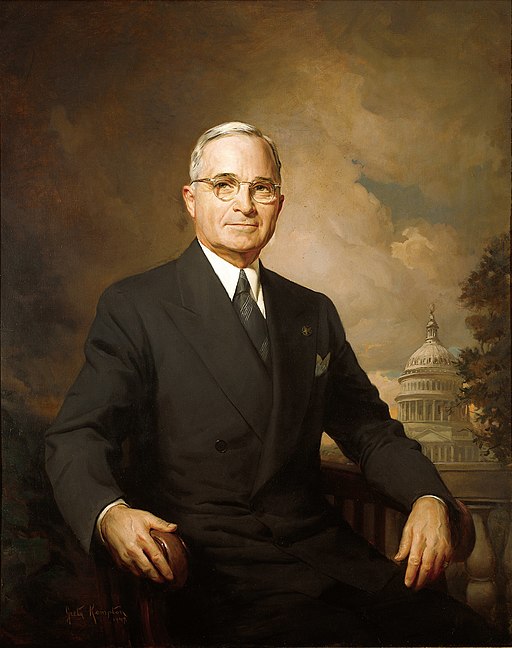
US
President Harry Truman was the first world
leader to recognize
Israel. But even so, the new state did not always have good relations with the
United States. There is evidence of this during the invasion of Egypt in 1956, when
Israel seized part
of Egypt's Sinai and Gaza and the United States threatened to cancel financial
assistance. Israel’s secret nuclear
project is another example of the USA going against the new state’s
plans.
 But,
after 1967, the relations between the United States and Israel began to grow
closer. During the Arab-Israeli war
in 1973, the Americans supported Israel. This decision guaranteed a strong
relationship between the two countries. At that time, US presidents and diplomats realized that Israel
could be an effective weapon in decreasing Soviet Russian influence in the Middle
East.
But,
after 1967, the relations between the United States and Israel began to grow
closer. During the Arab-Israeli war
in 1973, the Americans supported Israel. This decision guaranteed a strong
relationship between the two countries. At that time, US presidents and diplomats realized that Israel
could be an effective weapon in decreasing Soviet Russian influence in the Middle
East.
After
the Cold War, the United States was active in 'resolving' various conflicts and
problems in the region. The main reason was to bring the oil market under their
own control. Of course, a peaceful, stable region meant a continuous supply of oil,
while fighting sent prices rocketing. So, the United States presented itself
as the 'guarantor' of regional stability in the Middle East at that time.
Countries
like Saudi Arabia, the United Arab Emirates, Qatar, Jordan, Egypt, and Israel
agreed to this American ‘assistance’ because it allowed them to influence
Middle Eastern politics. But others, such as Iran, Syria and Iraq, did not join hands
with the US, which chose Israel to build military bases in the region to defend
its interests there.
The
United States then took on the responsibility of building bridges
between Palestine and Israel, so that a lasting peace could be reached. Over
the last few decades, every US president has tried to reconcile Israel with Palestine.
However, American support for peace has always been more in favour of Tel Aviv.
 The
United States does not support Israel only because of its foreign policy and Middle
East strategy though. Israel has been a major issue in US domestic politics since the eighties
because most Americans are sympathetic to the Israelis – about 70 % according
to recent surveys. But why do US citizens support Israel? One of the major reasons
is shared values of democracy and the Israeli liking for the European
culture, fashion and way of life. Christian
religious organizations are also strongly in favour of the Jewish state
and Americans are, by and large, believers in the Christian faith.
Perhaps ironically,
there is some disagreement among Jews though. For example, 65% of America's Jews are against
Israel's new settlements
in the West Bank while Christians are positive about them. Again, Jews who are
younger than do not consider themselves as Zionists.
The
United States does not support Israel only because of its foreign policy and Middle
East strategy though. Israel has been a major issue in US domestic politics since the eighties
because most Americans are sympathetic to the Israelis – about 70 % according
to recent surveys. But why do US citizens support Israel? One of the major reasons
is shared values of democracy and the Israeli liking for the European
culture, fashion and way of life. Christian
religious organizations are also strongly in favour of the Jewish state
and Americans are, by and large, believers in the Christian faith.
Perhaps ironically,
there is some disagreement among Jews though. For example, 65% of America's Jews are against
Israel's new settlements
in the West Bank while Christians are positive about them. Again, Jews who are
younger than do not consider themselves as Zionists.
And
then there is another factor: the American Israel Public Affairs
Committee (AIPAC) with its aim of brining US and Israel always closer. Although
AIPAC is not a political organization – or says it isn’t – it has a major impact
on deciding US foreign policy. How does it manage this?
 AIPAC
spends a lot of money on achieving its goals. It does not directly finance
any party but supports its preferred candidates as individuals, especially Republicans.
AIPAC has a special Congress Club, where each member gives a minimum of $5,000
every election. And this money is spent on helping pro-Israeli politicians. Of course,
if the AIPAC candidates
win seats in the Senate or Congress, they influence policies.
Although it is not known how much money AIPAC spends overall, they do have members who
give from one million dollars to hundreds of millions.
AIPAC
spends a lot of money on achieving its goals. It does not directly finance
any party but supports its preferred candidates as individuals, especially Republicans.
AIPAC has a special Congress Club, where each member gives a minimum of $5,000
every election. And this money is spent on helping pro-Israeli politicians. Of course,
if the AIPAC candidates
win seats in the Senate or Congress, they influence policies.
Although it is not known how much money AIPAC spends overall, they do have members who
give from one million dollars to hundreds of millions.
 The
relationship between the United States and Israel is also known as one of the
most expensive in the world. Just as Israel spends a lot of money to make an impact
in the United States, so does the United States in Israel. The United States
signed a free
trade agreement with Israel in 1985 and, ever since then, business
between the two countries has increased considerably.
The
relationship between the United States and Israel is also known as one of the
most expensive in the world. Just as Israel spends a lot of money to make an impact
in the United States, so does the United States in Israel. The United States
signed a free
trade agreement with Israel in 1985 and, ever since then, business
between the two countries has increased considerably.
Of
course, the million dollar question is if US support for Israel will continue
forever. For instance, Barack Obama tried hard to stop Israeli settlements in
the occupied West
Bank and Gaza. His relationship with Israeli Prime Minister Netanyahu was also
very cold. However, Israel and AIPAC then put pressure on Obama through their close friends
in Congress. And now Donald Trump has placed the US Embassy in Jerusalem, which
both Palestinians and Jews want as a capital, a move that greatly angered the
Arabs and America’s European allies, as well as its enemies, but, of course,
Israel.
We
will just have to wait and see what happens in the future.