

In an earlier lecture, we looked at slavery and discussed its role in the southern states of America. The Civil War was fought over this issue but even when the Union forces won, in 1865; it did not mean that Afro-Americans had achieved equality. A century later, Martin Luther King, Jr., Malcolm X and many others, including Rosa Parks were still fighting for their rights.
The Long Struggle for Civil Rights in the US
In an earlier lecture, we looked at
slavery and discussed its role in the southern states of America. The Civil War
was fought over this issue but even when the Union forces won, in 1865, it did
not mean that Afro-Americans had achieved equality. A century later, Martin Luther
King, Jr., Malcolm X and many others, including Rosa Parks, were still fighting
for their rights.
There was still segregation of blacks and whites in
restaurants, dance halls, schools and universities. Martin Luther King and
Malcolm X had very different approaches to how Afro-Americans might get their
rights as citizens. This is their story.
Martin
Luther King, Jr.
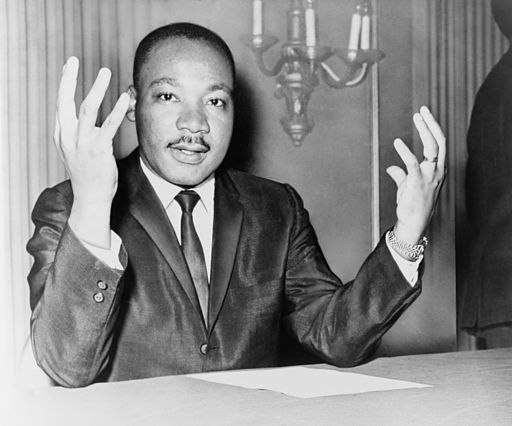 Martin Luther King, Junior was born in
the southern U.S.A. state of Georgia in 1929. He was a clever student at school
and went to university. When he was a teenager, he was not sure about his
Christian beliefs, but he later decided that the religion had many
important truths. After completing a degree in sociology,
he trained to become a man of religion, like his father. But he
was also interested in the rights of Afro-Americans and how to make
America a better place for black people to live and work.
Martin Luther King, Junior was born in
the southern U.S.A. state of Georgia in 1929. He was a clever student at school
and went to university. When he was a teenager, he was not sure about his
Christian beliefs, but he later decided that the religion had many
important truths. After completing a degree in sociology,
he trained to become a man of religion, like his father. But he
was also interested in the rights of Afro-Americans and how to make
America a better place for black people to live and work.
 Although King understood that America
must change, he could not find a way for this to happen until he heard
about Mahatma Gandhi, the great Indian freedom fighter. After reading
about Gandhi’s ideas on peaceful protest against
British rule in India, King decided to use these to help
Afro-Americans get their rights in the U.S. Like Gandhi, he believed
that freedom and killing did not go together.
Although King understood that America
must change, he could not find a way for this to happen until he heard
about Mahatma Gandhi, the great Indian freedom fighter. After reading
about Gandhi’s ideas on peaceful protest against
British rule in India, King decided to use these to help
Afro-Americans get their rights in the U.S. Like Gandhi, he believed
that freedom and killing did not go together.
In 1955, King organized his
first big protest in Montgomery, Alabama, another southern state in
America. A black woman, called Rosa Parks, had worked all day at her job sewing.
She sat down on the bus that was taking her home. In those days, black people
sat at the back of the bus and whites at the front. When the bus got fuller,
the blacks’ and whites’ seats met in the centre. If new white travelers got on
the bus, black customers stood up. Rosa Parks refused. The
police arrested her. You can read her story below.
Martin Luther King organized a boycott of
the buses. In other words, no black person – and also some whites – got on a
bus in the state. The police arrested King and people burnt down his
home. There were more arrests too, but in December 1956 the
U. S. Supreme Court decided that black people could sit where
they liked on buses in Alabama. This may seem like a small change in
the rights of Afro-Americans, but it wasn’t. Black people could now
sit where they wanted in restaurants, parks, libraries, cinemas, theatres and
churches. They could swim in the same pools as white people and sit
on the beach with them too.
 King helped to make John F. Kennedy
President of the United States, but later became unhappy about how slowly he
was changing the law to help Afro-Americans. He organized new protests where
black people broke unfair laws, although they did not fight. King
understood that the newspapers and television were important in changing
people’s ideas about the rights of black people. He was right. When
the police in the southern states arrested hundreds and also used
dogs against women and children, many more people began to ask for change in
the country.
King helped to make John F. Kennedy
President of the United States, but later became unhappy about how slowly he
was changing the law to help Afro-Americans. He organized new protests where
black people broke unfair laws, although they did not fight. King
understood that the newspapers and television were important in changing
people’s ideas about the rights of black people. He was right. When
the police in the southern states arrested hundreds and also used
dogs against women and children, many more people began to ask for change in
the country.
But Kennedy and the F.B.I. were getting
worried about King. They thought he was a Communist and started asking difficult questions
about his past, his friends and his beliefs. They also looked at his
friendships with women. King was married but always looked at beautiful women,
and sometimes he did more than look.
 In 1963, King organized a march when
President Kennedy began talking about changing
the laws on equal rights in Washington. The police
said he could not march in the capital, but King did not listen. In the
end, more than 250,000 people of every colour went on the march and
heard King’s famous ‘I have a dream’ speech. Here is part of it (changed a
little to make it easier to read):
In 1963, King organized a march when
President Kennedy began talking about changing
the laws on equal rights in Washington. The police
said he could not march in the capital, but King did not listen. In the
end, more than 250,000 people of every colour went on the march and
heard King’s famous ‘I have a dream’ speech. Here is part of it (changed a
little to make it easier to read):
“I have a dream that one day on the red hills
of Georgia the sons of slaves and the sons
of slave owners will sit down together as brothers.
“I have a dream that one day even the state of
Mississippi will be changed into an oasis of freedom and justice. I have a
dream that my four little children will one day live in a country where
their character will
be more important than the colour of their skin. I have a dream that
one day in Alabama, little black boys and black girls will join hands
with little white boys and white girls as sisters and brothers. I have a
dream today.”
The law changed so that black
children could go to the same schools and universities as white children and
that blacks and whites could work together in the same jobs for the same pay.
King also wanted $2 an hour as a minimum wage. This was the first time that he
looked at the economic rights of black workers. It was something
that took more and more of King’s time and energy in the years before his
murder in 1968.
Martin Luther King, Junior was shot
outside his hotel room in April, 1968. His killer, James Earl Ray, always said
that he was not working alone. Some people think the U.S. government helped
him.
Today, Martin Luther King is one of the
most famous Americans. He is the only one to have a U.S. national holiday in
his name.
The woman who did not give her bus seat to
a white man – Rosa Parks
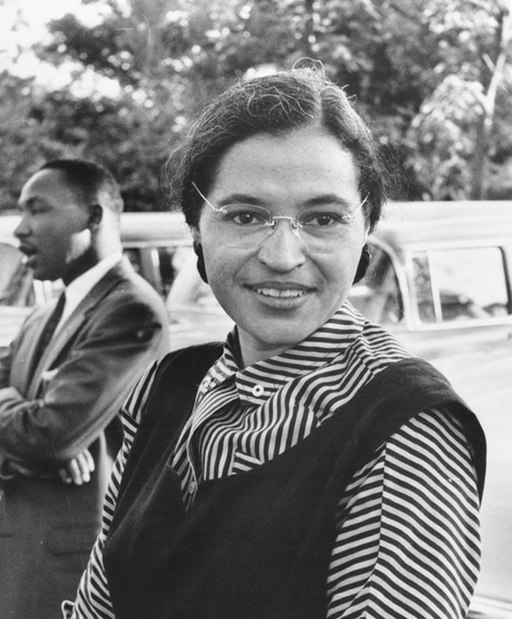 On 1st
December, 1955, Rosa Parks was sitting on a bus on her way home from work. She
was in the section for ‘coloured people’ or Afro-Americans. But the section for
white people was full and the bus driver asked her to move so that the whites
could sit down. There were three other Afro-Americans sitting in the same row as
Parks. They stood up and walked to the back of the bus. Rosa Parks, a forty-two
year old, married woman, refused. She was arrested and taken to the police
station.
On 1st
December, 1955, Rosa Parks was sitting on a bus on her way home from work. She
was in the section for ‘coloured people’ or Afro-Americans. But the section for
white people was full and the bus driver asked her to move so that the whites
could sit down. There were three other Afro-Americans sitting in the same row as
Parks. They stood up and walked to the back of the bus. Rosa Parks, a forty-two
year old, married woman, refused. She was arrested and taken to the police
station.
Rosa Parks had this to say about that day:
“People always say that I didn't give
up my seat because I
was tired, but that isn't true. I was not tired physically, or no more tired
than I usually was at the end of a working day. I was not old, although some
people have an image of me as old then. I was forty-two. No, the only tired I
was, was tired of giving in.”
Rosa Parks was born in Montgomery, Alabama, in 1913. Her parents were divorced and she grew up
with her grandparents. Decades later, she
could still remember her grandfather standing behind his closed front door with
a shotgun, when the Ku Klux Klan walked
past their house.
She said about the buses in Montgomery:
 “I’d see the bus
pass every day… But to me, that was a way of life; we had no choice… The bus
was (one of) the first ways I realized there was a black world and a white world.”
“I’d see the bus
pass every day… But to me, that was a way of life; we had no choice… The bus
was (one of) the first ways I realized there was a black world and a white world.”
Many important civil rights leaders – Martin Luther King, for instance – were interested in Parks’ case. But it was taking a long time. It could take years. So, they decided they would do something different. They asked all Afro-Americans to boycott the bus service in Montgomery. They asked them to share cars and to take taxis – taxis asked for ten cents, the same as the bus fare to take Afro-Americans. They asked them to walk but not to get on a bus.
This boycott lasted 381 days. Many Montgomery buses stood in the bus station. The bus company had financial difficulties.
Finally, Montgomery changed its rules about black passengers giving their seats to white people more than a year after the boycott began. Parks won.
Rosa Parks worked for civil rights for Afro-Americans for the rest of her life. She never became rich because she gave the money from her books and talks to civil rights organisations. She died at the age of ninety-two in 2005.
Malcolm X
 Malcolm X was
born Malcolm Little in 1925, and spent his teenage years moving from one foster
home to another until he was sent to prison for theft, drug dealing and burglary
when he was twenty-one. While he was behind bars though, he converted to Islam and educated
himself, and, on leaving prison, became a spokesperson for the Afro-American
Muslim group, Nation of Islam, headed by Elijah Muhammad.
Malcolm X was
born Malcolm Little in 1925, and spent his teenage years moving from one foster
home to another until he was sent to prison for theft, drug dealing and burglary
when he was twenty-one. While he was behind bars though, he converted to Islam and educated
himself, and, on leaving prison, became a spokesperson for the Afro-American
Muslim group, Nation of Islam, headed by Elijah Muhammad.
Malcolm X was not in favour of peaceful protest or of integration with the white population. Instead, he wanted a separate state within the US for Afro-Americans before getting their own homeland in Africa. He argued that black people were the original race on the planet, that whites were “devils” and were soon to become extinct, as Afro-Americans were superior. He also believed that people had the right to use violence to defend themselves against attack or if there was no other way that they could win their rights. Malcolm X even spoke on the same stage as the leader of the American Nazi Party, George Rockwell, arguing that blacks and whites could never live in peace together.
 When President
Kennedy was
assassinated, Malcolm X disobeyed Elijah Muhammad, who ordered his group
not to speak publicly on the death, and commented on television that he could
not be sorry because Kennedy had deserved what he got. Of course, America was
horrified and shocked.
When President
Kennedy was
assassinated, Malcolm X disobeyed Elijah Muhammad, who ordered his group
not to speak publicly on the death, and commented on television that he could
not be sorry because Kennedy had deserved what he got. Of course, America was
horrified and shocked.
Yet, it was statements like these that made Malcolm X the darling of the media. He increased membership of the Nation of Islam from just 500 when he joined to many thousands, including the heavyweight boxing champion of the world, Mohammad Ali. But more than all that, he offered a voice to those Afro-Americans who were tired of waiting quietly for justice and of peaceful protest.
Malcolm X often
criticized Martin Luther King and other civil rights leaders, calling them puppets
of the white race. He called King’s March on Washington “the farce in
Washington” and said he
did not know why so many black people were excited about a demonstration
"run by whites in front of a statue of a president (Lincoln) who has been
dead for a hundred years and who didn't like us when he was alive".
Malcolm X believed that fighting for civil rights was a mistake: Afro-Americans
were battling for
human rights and should take their case before the United Nations.
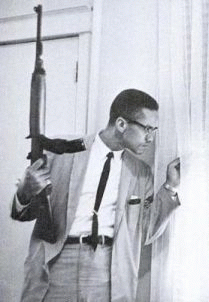 Increasingly, Malcolm X
turned his attention to developing nations – especially after he went on a pilgrimage
to Mecca – and saw the Afro-American struggle as a global one. After he split with
Nation of Islam leader, Elijah Muhammad, over differences of opinion on the Islamic faith,
he became a Sunni, something his friends in the organization never forgave him
for. Malcolm X started receiving death threats. Indeed, although his killers
were never identified, many suspect that it was the Nation of Islam which
ordered his assassination
in 1965. Others blame the US government.
Increasingly, Malcolm X
turned his attention to developing nations – especially after he went on a pilgrimage
to Mecca – and saw the Afro-American struggle as a global one. After he split with
Nation of Islam leader, Elijah Muhammad, over differences of opinion on the Islamic faith,
he became a Sunni, something his friends in the organization never forgave him
for. Malcolm X started receiving death threats. Indeed, although his killers
were never identified, many suspect that it was the Nation of Islam which
ordered his assassination
in 1965. Others blame the US government.
We cannot be sure but there
were signs that, in his last days, after meeting leaders like Nasser, the
Egyptian leader, fighting for greater independence for Arabs, Malcolm X was
starting to change his opinions about black supremacy and see the struggle for
human rights for blacks as part of a wider, socialist movement.
But there was no time for Malcolm X to explain his new ideologies, as he was gunned down on stage when he was about to make a speech in February 1965, when he was just thirty-nine years old. He had a very different vision of the future for Afro-Americans than Martin Luther King and one which was continually evolving until the day he died.
If you want to watch some videos on this topic, you can click on the links to YouTube videos below.
If you want to answer questions on this article to test how much you understand, you can click on the green box: Finished Reading?
Videos :
1. Who was Martin Luther? 95 theses & the Reformation | World History (1517) (8:34)
2. The Life of Dr. Martin Luther King, Jr.- MLK Day! (Animated) Black History Month Video (9:37)
3. I have a Dream Speech by Martin Luther King. Jr HD (subtitled) (6:46)
5. Rosa Parks – Civil Rights Activist | Mini Bio| (4:40)
6. Gandhi- Human Rights Activist | Mini Bio| Biography (3:34)
7. John F. Kennedy : The 35th President of the United States | Biography (4:00)
8. What is the Ku Klux Klan? (3:14)