Mountains are some of nature’s most beautiful yet most daunting features. The views of them and from them are some of the most memorable of our lives. But, where do these giants come from? And, what’s the difference between a mere hill and a true mountain?
The Majesty of Mountains, the Volatility of Volcanoes
“Great things are done when men and mountains
meet” – William Blake, eighteenth century
English artist
Mountains
are some of nature’s most beautiful yet most daunting features. The views of
them and from them are some of the most memorable of our lives. But,
where do these giants come from? And, what’s the difference between a mere hill
and a true mountain?
 Their
origin lies in the movements of the Earth’s crust. If two massive surfaces collide,
then the meeting edges will crumple and rise up. Imagine what happens if
you push two towels together that are lying side by side on the wash table. The
mountains formed by this crash of tectonic plates are called ‘fold’ mountains.
Their
origin lies in the movements of the Earth’s crust. If two massive surfaces collide,
then the meeting edges will crumple and rise up. Imagine what happens if
you push two towels together that are lying side by side on the wash table. The
mountains formed by this crash of tectonic plates are called ‘fold’ mountains.
Sometimes,
the two colliding
plates don’t crumple into each other. One just sits
a little on top of the other like a floor tile slightly overlapping another. These
mountains are called ‘block’. The third kind, volcanoes, are formed very
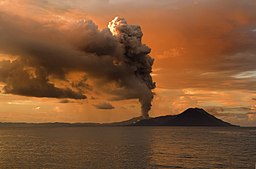
differently. Think of them like pimples on the Earth’s ‘skin’. Red hot lava,
just below the Earth’s surface, will occasionally build up such pressure that
it pushes the Earth up and then the top explodes, relieving the pressure
but often destroying, for a few years, land and life for miles around. This pimple
effect explains why volcanoes, though often found among other mountains, are
equally often found in isolation, like Mount Fuji in Japan or Mount
Kilimanjaro in Africa. Some volcanoes are active while others have not erupted
in tens of thousands of years. But we’ll speak of these more in a few minutes.
 Those,
then, are the different kinds of mountains but how else can we define them,
especially as distinct from hills? The truth is that it’s a little
difficult. There is no standard height requirement, though the U.S.A. has
one: one thousand feet (or a little over three hundred metres). Mountains tend
to have steeper sides than hills; and mountains are more likely to be
rocky with no covering soil or vegetation as you get towards
the summit.
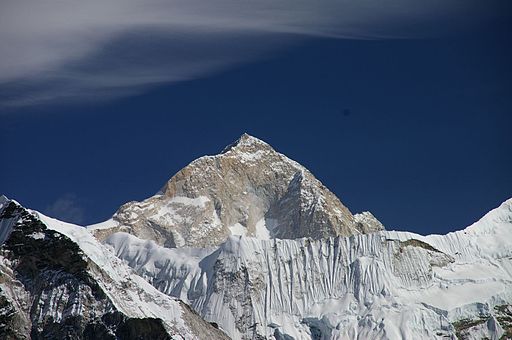
And another sign is that mountains normally come to an angular peak
at the top, whereas hilltops are generally more rounded.
Those,
then, are the different kinds of mountains but how else can we define them,
especially as distinct from hills? The truth is that it’s a little
difficult. There is no standard height requirement, though the U.S.A. has
one: one thousand feet (or a little over three hundred metres). Mountains tend
to have steeper sides than hills; and mountains are more likely to be
rocky with no covering soil or vegetation as you get towards
the summit.
And another sign is that mountains normally come to an angular peak
at the top, whereas hilltops are generally more rounded.
Of
course, the world’s highest mountain is Mount Everest in the Himalayas, at over
8,000 metres, but it’s not the world’s biggest mountain. That honour goes to Mauna
Loa on Hawaii. It’s also a volcano and it reaches a height of 4,170 metres, but
that’s nothing compared to its volume: 40,000 km³. It makes quite a sight, even
from far out at sea.
 Mountains
most often come in long runs known as ranges. The Alps in Europe, the Andes in
South America, the Urals dividing Europe and Asia, or the Rockies in North
America are just some examples. Many ranges have sub-ranges or side-ranges,
like fingers on a hand. These are known as ‘cordilleras’.
Mountains
most often come in long runs known as ranges. The Alps in Europe, the Andes in
South America, the Urals dividing Europe and Asia, or the Rockies in North
America are just some examples. Many ranges have sub-ranges or side-ranges,
like fingers on a hand. These are known as ‘cordilleras’.
Mountains
or mountain ranges have very distinct eco-systems. As the mountains go higher,
the air becomes thinner or, put more technically, the proportion of
oxygen in the air falls, which means both plants and animals have to adapt to
survive. Humans who live in high mountains usually develop, across many
generations, especially big lungs to deal with the thin air.
It’s
also cooler in the mountains the higher you go, and often very cold at night.
Despite the fact that there are lower temperatures in the mountains compared to
lower altitudes,
the sun in the mountains gives sunburn and sunstroke much more quickly
because there is far less cloud and pollution to filter the sun and because, if you
are at an
altitude of 3,000 metres, then you are three kilometres closer to
the sun.
 Mountains
are also important as watersheds. As clouds fill with water and become
heavy, they need something solid to help them drop their load of rain. Crashing
into mountain tops works very well as the jagged peaks literally tear
open the clouds. The rain, once it falls on the mountain sides, has nowhere to
go but downwards and, as the little streams flow into each other, so they
become wider and fuller until they are rivers.
Mountains
are also important as watersheds. As clouds fill with water and become
heavy, they need something solid to help them drop their load of rain. Crashing
into mountain tops works very well as the jagged peaks literally tear
open the clouds. The rain, once it falls on the mountain sides, has nowhere to
go but downwards and, as the little streams flow into each other, so they
become wider and fuller until they are rivers.
When
the rivers are in the foothills, they are still flowing quite fast but
they are wide and deep enough to put a mill wheel in the water. The
strong current turns
the wheel fast and so whole saw mills and textile mills can run this way,
either directly from the water wheel or from the electricity the wheel is able
to generate; or a mixture of the two. This is why the first Industrial
Revolution in England and many other countries started in foothills.
In
most other ways, mountainous areas are not the ideal habitat for human beings and
usually populations are low wherever there are high mountains. They are,
however, easy to defend and often form the border between two countries or
regions. Switzerland, which is virtually all high mountains, has kept invaders
out for centuries by defending a few narrow mountain passes.
 The
other happy human connection with mountains is in the growing industry of leisure
and tourism. Mountains don’t make for easy farming, with thin and poor soil and
little flat land to use, but they are very beautiful, with clean air and water,
and (if you have the energy) it’s really nice to go for a walk there.
The
other happy human connection with mountains is in the growing industry of leisure
and tourism. Mountains don’t make for easy farming, with thin and poor soil and
little flat land to use, but they are very beautiful, with clean air and water,
and (if you have the energy) it’s really nice to go for a walk there.
But,
it doesn’t stop at walking: these days, there’s not just mountain climbing but
also rock climbing as well as skiing, ice climbing, snow-boarding and bob sleigh.
Most of the Winter Olympic sports are mountain sports.
Mountains
are a curse
and a
blessing but they are surely the perfect punctuation to
the poem that is the Earth’s surface.
But
if mountains can be a curse, what of volcanoes?
One day in 1943, in a cornfield in Mexico, a farmer noticed a crack in his land. A small hill started to grow there. A year later, it was 336 metres high. Quite quickly, the hill began to erupt and throw lava onto the land around it. The people in the villages of Paricutin and San Juan could not stay where their parents and grandparents lived before them. They ran for their lives. They left their homes, history and animals behind. They had no choice.
Nine years later, this new volcano became extinct.
 Today, only the top of the church in San Juan is above the
ground. The rest of the village is covered in volcanic lava that has changed to
rock.
Today, only the top of the church in San Juan is above the
ground. The rest of the village is covered in volcanic lava that has changed to
rock.
The volcano was called Paricutin, the same name as the village it destroyed. It is very unusual because scientists almost never get the chance to see a volcano at birth and when it is extinct.
Volcanoes appear when heat from the centre of the Earth – it is called the Earth’s core – travels through the 3,000 km thick mantle, through the 50 km lithosphere to the crust, where we live. The mantle is full of magma, which is unbelievably hot liquid rock.
The power of a volcano can be as great as hundreds or even thousands of nuclear explosions. A volcano can throw rocks thirty or more kilometres into the sky. There is often so much ash that planes cannot fly hundreds of kilometres away from the volcano, sometimes for days. And, of course, all that ash in the air comes back to Earth as acid rain. Some scientists think that volcanoes make about half the air pollution in the world today.
In fact, it is volcanoes that make the Earth’s atmosphere. Only oxygen comes from trees and plants; the other gases are from volcanoes.
 But the importance of volcanoes does not stop there. In the
last century, 80,000 people have died because of volcanoes. This is because
they erupted
so fast that people could not leave their homes and villages before the lava covered
them. Perhaps they were sleeping; maybe there was no transport for them to get
away. But it is possible that the volcano erupted so fast that there was no time to run.
But the importance of volcanoes does not stop there. In the
last century, 80,000 people have died because of volcanoes. This is because
they erupted
so fast that people could not leave their homes and villages before the lava covered
them. Perhaps they were sleeping; maybe there was no transport for them to get
away. But it is possible that the volcano erupted so fast that there was no time to run.
In the year 79, Mount Vesuvius erupted, destroying the Roman city of Pompeii. We can still see how people were shopping, eating, kissing at the time. A dog – now changed to stone – was sleeping in the street as it was covered with lava. And we can still see many of the buildings, statues and pictures. These make the dead seem alive again and help us to understand that these people – killed so quickly on a single day – were just like us.
And two thousand years later, just like the people of Pompeii, we have no idea when volcanoes are going to happen.
If you want to watch some videos on this topic, you can click on the links to YouTube videos below.
Videos :
1. How are Mountains Made? (2:07)
2. Plate Tectonics - how Mountains are Made (3:00)
3. Where do Mountains Come From? (3:50)
4. Volcanic Mountains Formation (5:21)
6. A New Volcano Erupts In Mexico 1943 (1:24)
8. Pompeii Volcano Eruption (3:19)
9. How The Volcanic Eruption Turned People Into Stone – Pompeii (10:45)