

Since Jews first started coming to the continent about fifteen hundred years ago, the relationship with Christian Europe has never been an easy one. The conflict between the European wish to see everyone assimilate and the Jewish need to maintain a separate identity could only lead to trouble and everywhere they went the Jews found themselves, sooner or later, unwelcome. Though the Jews had entered Europe from both East and West, the vast majority of Europe’s Jews lived in the East, in countries like Poland, Ukraine or Lithuania, either in separate inner city areas called ‘ghettos’ or in Jewish-only villages often called ‘stetls’.
European
Anti- Semitism: The Dreyfus Affair
 Since Jews first started coming to the
continent about fifteen hundred years ago, the relationship with Christian
Europe has never been an easy one. The conflict between the European wish to
see everyone assimilate and the Jewish need
to maintain a separate identity could only lead to trouble and
everywhere they went the Jews found themselves, sooner or later, unwelcome. Though
the Jews had entered Europe from both East and West, the vast majority of Europe’s
Jews lived in the East, in countries like Poland, Ukraine or Lithuania, either
in separate inner city areas called ‘ghettos’ or in Jewish-only villages often
called ‘stetls’.
Since Jews first started coming to the
continent about fifteen hundred years ago, the relationship with Christian
Europe has never been an easy one. The conflict between the European wish to
see everyone assimilate and the Jewish need
to maintain a separate identity could only lead to trouble and
everywhere they went the Jews found themselves, sooner or later, unwelcome. Though
the Jews had entered Europe from both East and West, the vast majority of Europe’s
Jews lived in the East, in countries like Poland, Ukraine or Lithuania, either
in separate inner city areas called ‘ghettos’ or in Jewish-only villages often
called ‘stetls’.
The countries of Western Europe had
only very small Jewish populations, all urban, and often originally from
Spain, Portugal or North Africa but, around the middle of the 19th century,
this began to change for a number of reasons.
Firstly, the relationship between the
Jews and the local communities in the East had completely broken
down to the point where there were often ‘pogroms’ in which thousands of
Jews would be killed. The Jews responded in the way they always had: by moving
on. Many, as many as could get there, went to the Americas, especially the
U.S.A. but large numbers settled in Western European cities where
the comparative absence
of anti-Semitism meant that, within a generation, there was a large
Jewish middle-class entering the professions and politics.
For the first
time, anti-Semitism started to become a reality among the upper and
middle classes of France or Holland or England but no legal barriers
were made against Jews in any field and they entered all the professions,
including the army.
 In the early 1890s, France was aware
that its next war would probably be with Germany. Before any shooting started,
the war would be one of intelligence and spying. This, in France, was
the responsibility of the Deuxieme Bureau (‘Second Office’), the official name
of the French military intelligence agency. They had a problem: for
some time they had known that one of their officers was passing secrets to the
Germans but they did not know which officer. The upper-class, Christian, French
army officers had no real information to help them so they decided it would be
the person whose face did not fit.
In the early 1890s, France was aware
that its next war would probably be with Germany. Before any shooting started,
the war would be one of intelligence and spying. This, in France, was
the responsibility of the Deuxieme Bureau (‘Second Office’), the official name
of the French military intelligence agency. They had a problem: for
some time they had known that one of their officers was passing secrets to the
Germans but they did not know which officer. The upper-class, Christian, French
army officers had no real information to help them so they decided it would be
the person whose face did not fit.
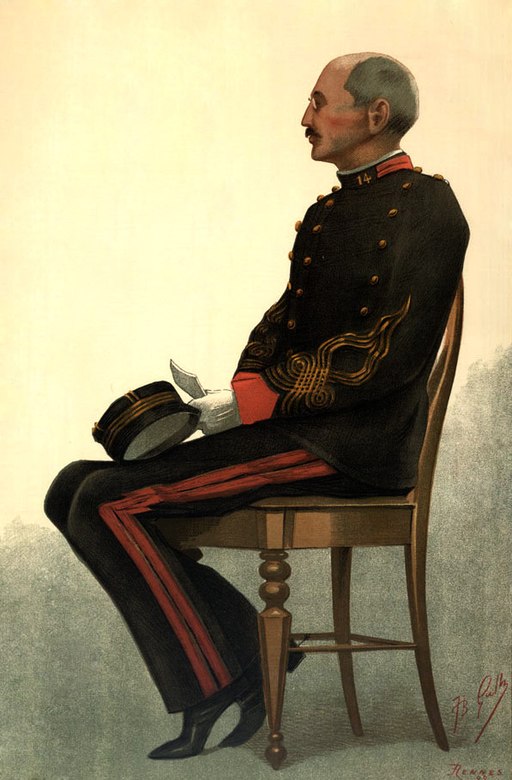
One officer stood out in this
way. Alfred Dreyfus was not upper-class or Christian and he came from a region
that was really half German. Dreyfus was an Alsatian Jew. Alsace is
the province between Germany and France. It has changed from French
to German and back again many times and the local dialect is based on German, not
French.
 However, it was not that Dreyfus came
from half-German Alsace that caused suspicion. It was because he was Jewish. Thirty
years earlier, the French Army would never have taken him. Many of the intelligence officers
investigating the stolen secrets felt that it was so obviously this
German-speaking Jew that they really did not need to look further. Dreyfus was
given a rapid and unfair court martial and sent to the notorious Devil’s
Island, a cruel French prison just off the coast of Venezuela.
However, it was not that Dreyfus came
from half-German Alsace that caused suspicion. It was because he was Jewish. Thirty
years earlier, the French Army would never have taken him. Many of the intelligence officers
investigating the stolen secrets felt that it was so obviously this
German-speaking Jew that they really did not need to look further. Dreyfus was
given a rapid and unfair court martial and sent to the notorious Devil’s
Island, a cruel French prison just off the coast of Venezuela.
And there he might have stayed but his
family, and especially his brother, were so sure of his innocence that they
started a campaign to clear his name.
It was hard work. In almost any society, if someone is sent to prison wrongly,
the detectives, judges and lawyers who did this will fight hard to keep the
innocent person in prison to save face and their own careers. This is
exactly what the French generals and conservative politicians did though, in
truth, they had found out soon after destroying Dreyfus that the secrets were
being passed to the Germans by another officer called Esterhazy.
 The more they looked into Esterhazy’s
activities, the more obvious it became that he alone had committed these
crimes. However, Esterhazy was aristocratic and Catholic and, anyway, it would
be extremely embarrassing to discover that not only had
they sent the wrong man to prison but that the real criminal was one of their
own kind.
The more they looked into Esterhazy’s
activities, the more obvious it became that he alone had committed these
crimes. However, Esterhazy was aristocratic and Catholic and, anyway, it would
be extremely embarrassing to discover that not only had
they sent the wrong man to prison but that the real criminal was one of their
own kind.
As the campaign to release Dreyfus
continued and grew, all France fell into one of two positions: Dreyfus was,
typical of a Jew, disloyal to his country and pro-German. (This
was long before Adolf Hitler and the Nazis.) This point of view led to
anti-Jewish riots in many French cities. In the meanwhile, the
writer, Emile Zola, led the campaign for Dreyfus.
Zola had written a letter to the French
newspapers accusing generals,
politicians and other powerful men of acting out of racism and outdated views. Wasn’t this
France? The French Revolution had established the right to Liberty, Equality
and Fraternity. Dreyfus was locked in prison – so much
for liberty. He was there because, as a Jew, he could not get fair
treatment from the French Army and government – so much for equality. And about
half of all French citizens refused to see Dreyfus, born in France, as their
national brother – so much for fraternity.
The case was retried but, to great
surprise, Dreyfus was again found guilty in what was obviously a verdict to
save the
reputations of dozens of French public figures.
This sharpened the political and social crisis in France and,
desperate for a compromise, the French government offered to
‘pardon’ Dreyfus. If Dreyfus agreed, he would be freed immediately but only by
accepting that he was guilty. Broken by years in a hard French prison, Dreyfus
agreed and came home to France.
Finally, in 1906, his name was cleared.
He was allowed to return to the French army with a promotion and he fought for
France against Germany in the First World War. He died in 1935.
 Of course, the personal tragedy of a
man wrongly
accused and suffering for years to clear his name was what the
case was about. However, what this meant for the future of the Jews in Europe
was also very important. It was at exactly this time that the Jewish Zionist
movement began, in Basle, Switzerland started by Chaim Weizmann and Theodore
Herzl. They believed that the Jews could never live happily in Europe unless
they gave up their Jewish identity. Even slight assimilation was unacceptable to the
Zionists and Herzl and Weizmann suggested the ‘Final Solution’.
Of course, the personal tragedy of a
man wrongly
accused and suffering for years to clear his name was what the
case was about. However, what this meant for the future of the Jews in Europe
was also very important. It was at exactly this time that the Jewish Zionist
movement began, in Basle, Switzerland started by Chaim Weizmann and Theodore
Herzl. They believed that the Jews could never live happily in Europe unless
they gave up their Jewish identity. Even slight assimilation was unacceptable to the
Zionists and Herzl and Weizmann suggested the ‘Final Solution’.
This was the expression they invented
to mean getting all the Jews out of Europe and into Palestine to set up
an exclusively Jewish
state there. The Zionists felt that a case like the Dreyfus Affair proved
that Jews would never really be accepted anywhere in Europe.
Jews and others who were opposed to
the racial separatist ideas of the Zionists pointed out that the Dreyfus affair was
famous because it was exceptional and not common and, in fairness,
there really were no comparable cases anywhere in Western Europe. They
also pointed out that, while one half of France had reacted to the case with
racist nationalism, the other half (including the intellectual elite) had
fought hard and with great integrity to undo the injustice.
And what about Esterhazy, the officer who really betrayed France? The generals did everything they could to clear his name but it became very obvious what he had done and, after being declared innocent by a military trial that was so biased in his favour that it became a laughing stock, Esterhazy quietly went away to England and lived in comfort, probably on the money the Germans had paid him for the secrets.
If you want to watch some videos on this topic, you can click on the links to YouTube videos below.
If you want to answer questions on this article to test how much you understand, you can click on the green box: Finished Reading?
Videos :