
At the very end of the 18th century – in 1797, to be precise – in Edinburgh, capital of Scotland, James Hutton was dying. This was bad news for Hutton, of course, but good news for geology as it cleared the way for a man named John Playfair to re-write Hutton’s classic work without embarrassing the great scientist who had done so much to advance human understanding of Earth sciences.
Ageing the Earth
 At the very end of the 18th century
– in 1797, to be
precise – in Edinburgh, capital of Scotland, James Hutton was dying.
This was bad news for Hutton, of course, but good news for geology as it
cleared the way for a man named John Playfair to re-write Hutton’s classic work
without embarrassing
the great scientist who had done so much to advance human understanding of
Earth sciences.
At the very end of the 18th century
– in 1797, to be
precise – in Edinburgh, capital of Scotland, James Hutton was dying.
This was bad news for Hutton, of course, but good news for geology as it
cleared the way for a man named John Playfair to re-write Hutton’s classic work
without embarrassing
the great scientist who had done so much to advance human understanding of
Earth sciences.
Hutton was, by all accounts, a man of the most brilliant insights and liveliest conversation, a delight to sit next to at the dinner table, and unequalled in understanding the mysterious slow processes that shaped the Earth. Unfortunately, he was unable to write his ideas and discoveries in a way that anyone could understand. Here he is in his 1795 masterwork, A Theory of the Earth with Proofs and Illustrations, discussing . . . something:
The world which we inhabit is composed of the materials, not of the earth which was the immediate predecessor of the present, but of the earth which, in ascending from the present, we consider as the third, and which had preceded the land that was above the surface of the sea, while our present land was yet beneath the water of the ocean.
Incomprehensible!
Yet almost
singlehandedly, he created the science of geology and transformed
our understanding of the Earth. Hutton was born in 1726 into a rich Scottish family,
and could spend his life in light work and intellectual hobbies. He studied
medicine, but did not enjoy it and turned instead to farming, which he followed
in a relaxed and scientific way on the family land. Tired of fields and sheep,
in 1768 he moved to Edinburgh, where he founded a successful business, and busied himself
with science. Edinburgh at that time was an intellectual centre. Hutton became
a member of the Oyster Club, where he passed his evenings with men such as the
economist Adam Smith, the chemist Joseph Black, and the philosopher David Hume,
as well as occasional visitors like Benjamin Franklin and James Watt.
 Like many gentlemen of that age, Hutton took
an interest in nearly everything. He conducted experiments with chemicals, investigated
methods of coal mining and canal building, toured salt mines, discussed heredity,
collected fossils, and came up with theories on rain, the composition of air, and the laws of motion.
But his
particular interest was geology.
Like many gentlemen of that age, Hutton took
an interest in nearly everything. He conducted experiments with chemicals, investigated
methods of coal mining and canal building, toured salt mines, discussed heredity,
collected fossils, and came up with theories on rain, the composition of air, and the laws of motion.
But his
particular interest was geology.
A question that attracted interest in
that fantastically curious age was why ancient sea shells and other marine fossils
were so often found on mountaintops. How did they get there? Those who thought
they had a solution were on two opposing sides. One group, known as the
Neptunists, was sure that everything on Earth, including seashells in
impossibly high places, could be explained by rising and
falling sea levels. They believed that mountains, hills, and other features
were as old as the Earth itself, but were changed when water surrounded them
during periods of global flooding.
Against them were the Plutonists, who noted
that volcanoes and earthquakes continually changed the face of the planet but clearly
owed nothing to seas. The Plutonists also raised difficult questions about
where all the water went when it wasn’t flooding. If there was enough of it at
times to cover mountains, then where was it during calmer times? They believed
that there were huge
internal forces as well as surface ones acting on the Earth. However,
they couldn’t explain how all those shells got up mountains.
Hutton had a series of exceptional insights. From looking
at his own farm, he could see that soil was created by the erosion of rocks and that particles
were continually washed away by streams and rivers and re-deposited elsewhere. He realized
that if this process continued to its natural conclusion then Earth would
eventually be smooth. Yet there were hills everywhere around him. Clearly there
was another process, some kind of renewal and uplift that created new hills and
mountains to keep the cycle going. The marine fossils on mountaintops, he decided, did
not come from floods, but had risen with the mountains themselves. He also deduced
it was heat within the Earth that created new rocks and continents and pushed
up mountains. Above all, what Hutton’s theories suggested was that Earth
processes required huge amounts of time, far more than anyone had ever dreamed.
 In 1785, Hutton worked his ideas into
a long paper, which was read at meetings of the Royal Society of Edinburgh. It
attracted almost no notice at all. Nobody in the audience had any idea what he
was talking about. Encouraged by his friends to expand his theory in book form, Hutton
spent the next ten years preparing his life’s work, published in two volumes in
1795.
Together the two books were nearly a
thousand pages and were worse than even his most pessimistic friends had feared.
Apart from anything else, nearly half the completed work now
was quotations still in the original French. A third volume was so boring that
it wasn’t published until 1899, more than a century after Hutton’s death, and
the fourth and last was never published at all.
In 1785, Hutton worked his ideas into
a long paper, which was read at meetings of the Royal Society of Edinburgh. It
attracted almost no notice at all. Nobody in the audience had any idea what he
was talking about. Encouraged by his friends to expand his theory in book form, Hutton
spent the next ten years preparing his life’s work, published in two volumes in
1795.
Together the two books were nearly a
thousand pages and were worse than even his most pessimistic friends had feared.
Apart from anything else, nearly half the completed work now
was quotations still in the original French. A third volume was so boring that
it wasn’t published until 1899, more than a century after Hutton’s death, and
the fourth and last was never published at all.
Luckily Hutton had John Playfair, a professor
of mathematics at the University of Edinburgh and a close friend, who could not
only write but, thanks
to many years with Hutton, actually understood what the great man
was trying to say. In 1802, five years after Hutton’s death, Playfair produced
a simplified book of Hutton’s principles, Illustrations of the Huttonian
Theory of the Earth. The book was appreciated by those with an
active interest in geology, which in 1802 was not a large number. That,
however, was about to change.
 In the winter of 1807, thirteen interested
friends in London got together at a pub in Covent Garden, to form a club called
the Geological Society. The idea was to meet once a month to exchange
geological ideas over dinner. The price was set very high to discourage
those with qualifications and interest but who were not gentlemen. It soon
became clear, however, that there was demand for an institution, with a headquarters,
where people could discuss new findings. In a decade, membership grew to four
hundred – still all gentlemen, of course – and the Geological looked like
getting bigger than the Royal as the premier scientific society in the country.
In the winter of 1807, thirteen interested
friends in London got together at a pub in Covent Garden, to form a club called
the Geological Society. The idea was to meet once a month to exchange
geological ideas over dinner. The price was set very high to discourage
those with qualifications and interest but who were not gentlemen. It soon
became clear, however, that there was demand for an institution, with a headquarters,
where people could discuss new findings. In a decade, membership grew to four
hundred – still all gentlemen, of course – and the Geological looked like
getting bigger than the Royal as the premier scientific society in the country.
The members met twice a month from November
until June, when almost all of them went off to do fieldwork. These weren’t
people with a financial interest in minerals or even academics, but simply
gentlemen with the wealth and time for a hobby at a more or less professional
level. By 1830, there were 745 of them.
It’s hard to imagine now, but geology excited
the nineteenth century in a way that no science ever had before or would again.
In 1839, when Roderick Murchison published The Silurian System, a thick
and difficult study of a type of rock called greywacke, it was an instant bestseller,
racing through four editions, even though it cost eight guineas a copy and was
unreadable. And when, in 1841, the great Charles Lyell traveled to America to
give lectures in Boston, sellout audiences of three thousand packed in to hear
his sleepy descriptions of marine zeolites in Campania.
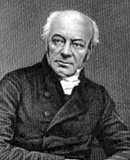 Charles Lyell was born in the year that Hutton
died and only seventy miles away, in the village of Kinnordy. Though Scottish
by birth, he grew up in the far south of England, because his mother was sure
that Scots were drunks. Like so many other great scientific minds of that age, Lyell
came from a background of comfortable wealth and intellectual energy. From his
father Lyell gained an interest in natural history, but it was at Oxford, where
he was taught by
Reverend William Buckland, that the young Lyell began his lifelong
interest in geology.
Charles Lyell was born in the year that Hutton
died and only seventy miles away, in the village of Kinnordy. Though Scottish
by birth, he grew up in the far south of England, because his mother was sure
that Scots were drunks. Like so many other great scientific minds of that age, Lyell
came from a background of comfortable wealth and intellectual energy. From his
father Lyell gained an interest in natural history, but it was at Oxford, where
he was taught by
Reverend William Buckland, that the young Lyell began his lifelong
interest in geology.
Buckland had some real intellectual achievements,
but he is remembered as much for his eccentricities. He was especially famous for the
wild animals, some large and dangerous, allowed to walk through his house and
garden, and for eating every animal on Earth. Guests at Buckland’s house might
eat baked mice, roasted hedgehog, or boiled sea slug. He became an expert on
coprolites – fossilized toilet – and had a table made of them.
Charles Darwin thought Buckland a fool, but
Lyell liked him enough to go touring with him in Scotland in 1824. It was soon
after this trip that Lyell decided to leave a career in law and turn his
attention to geology full-time.
Lyell was extremely short-sighted and eventually
would go blind. His other strange habit, when thinking, was lying across two
chairs at once or resting his head on the seat of a chair, while standing up. Lyell’s
only real job in life was as professor of geology at King’s College in London
from 1831 to 1833. It was around this time that he produced The Principles
of Geology, which in many ways explained Hutton’s thoughts a generation
earlier.
 Between Hutton’s age and Lyell’s there was
another geological fight. The new battle became an argument between catastrophism
and uniformitarianism, unattractive terms for an important and very
long-running disagreement. Catastrophists believed the Earth was shaped by
sudden disasters – floods principally. Catastrophism was comforting to
Christians like Buckland because it allowed them to include Noah’s flood in
serious scientific discussions. Uniformitarians by contrast believed that changes on
Earth were gradual
and that nearly all Earth processes happened over immense periods
of time. Hutton was more father of the idea than Lyell, but it was Lyell most
people read, and so he became in most people’s minds the father of modern
geological thought.
Between Hutton’s age and Lyell’s there was
another geological fight. The new battle became an argument between catastrophism
and uniformitarianism, unattractive terms for an important and very
long-running disagreement. Catastrophists believed the Earth was shaped by
sudden disasters – floods principally. Catastrophism was comforting to
Christians like Buckland because it allowed them to include Noah’s flood in
serious scientific discussions. Uniformitarians by contrast believed that changes on
Earth were gradual
and that nearly all Earth processes happened over immense periods
of time. Hutton was more father of the idea than Lyell, but it was Lyell most
people read, and so he became in most people’s minds the father of modern
geological thought.
Lyell believed the Earth’s shifts were steady,
that everything that had ever happened in the past could be explained by events
still going on today. Lyell didn’t just disagree with catastrophism, he hated
it. Catastrophists believed that a series of extinctions repeatedly wiped animals
out and replaced them with new ones. It was too convenient as a way to explain
the unknown.
It’s impossible to overestimate Lyell’s influence. The
Principles of Geology went through twelve editions in Lyell’s lifetime and
included notions that shaped geological thinking into the 20th
century.
Meanwhile, geology had much sorting out to do,
and not all of it went smoothly. From the start, geologists tried to
categorize rocks by the periods in which they were laid down, but there were
often bitter disagreements about where to put the dividing lines. This wasted a
huge amount of time.
 Nowadays, very generally, geological time is
divided first into four great eras: Precambrian, Paleozoic, Mesozoic, and
Cenozoic. These four eras are then divided into a dozen to twenty subgroups,
usually called ‘periods’ though sometimes ‘systems’. Most of these are also well
known: Cretaceous, Jurassic, Triassic, and so on. Then come Lyell’s
epochs – the Pleistocene, Miocene, and so on – which apply only to the most
recent (but paleontologically
busy) sixty-five million years, and finally we have finer
subdivisions known as stages or ages. Fortunately, you’re unlikely ever to hear
about any of them again.
Nowadays, very generally, geological time is
divided first into four great eras: Precambrian, Paleozoic, Mesozoic, and
Cenozoic. These four eras are then divided into a dozen to twenty subgroups,
usually called ‘periods’ though sometimes ‘systems’. Most of these are also well
known: Cretaceous, Jurassic, Triassic, and so on. Then come Lyell’s
epochs – the Pleistocene, Miocene, and so on – which apply only to the most
recent (but paleontologically
busy) sixty-five million years, and finally we have finer
subdivisions known as stages or ages. Fortunately, you’re unlikely ever to hear
about any of them again.
Further confusing the matter is that the
stages or ages in North America have different names from those in Europe and
often only roughly
intersect in time. Also, all this changes from textbook to textbook
and from person to person, so that some authorities describe seven recent epochs,
while others are happy with four.
It can all get very confusing to
non-specialists, but to a geologist these can be matters of passion.
At least today we can use some advanced
dating techniques. For most of the nineteenth century geologists had only
hopeful guesswork. The frustrating position then was that although they
could place the various rocks and fossils in order by age, they had no idea how
long any of those ages were. When Buckland estimated the age of an
Ichthyosaurus skeleton he could do no better than suggest that it had lived
somewhere between “ten thousand, or more than ten thousand times ten thousand”
years earlier.
Although there was no reliable way of
dating periods, there were many people willing to try. The best-known early
attempt was in 1650 when Archbishop James Ussher of the Church of Ireland made
a careful study of the Bible and other historical sources and concluded that
the Earth was created at midday on October 23, 4004 B.C.
There is a myth, incidentally, that Ussher’s views dominated scientific
beliefs into the nineteenth century, and that it was Lyell who showed it was
not true. In fact, no. No geologist of any nationality suggested a Biblical
timescale. Even Buckland, a very serious Christian, noted that the Bible never
said God made Heaven and Earth on the first day, but only “in the beginning.”
That beginning may have lasted “millions upon millions of years.” Everyone
agreed that the Earth was ancient. The question was how ancient.
 The first scientific attempt at
measurement was made by the Frenchman Georges-Louis Leclerc, Count of Buffon,
in the 1770s. It was known that the Earth radiated large amounts of heat – that
was clear to anyone who went down a coal mine – but there wasn’t any way of estimating
how fast it disappeared. Buffon’s experiment was heating spheres until they
glowed white hot and then estimating the rate of heat loss by touching them
(probably very lightly at first) as they cooled. From this he guessed the
Earth’s age to be somewhere between 75,000 and 168,000 years old. This was, of
course, a huge underestimate,
but still radical,
and Buffon was threatened with being thrown out of the Catholic Church because
of it. A practical man, he apologized at once, then repeated it in all his
later writings.
The first scientific attempt at
measurement was made by the Frenchman Georges-Louis Leclerc, Count of Buffon,
in the 1770s. It was known that the Earth radiated large amounts of heat – that
was clear to anyone who went down a coal mine – but there wasn’t any way of estimating
how fast it disappeared. Buffon’s experiment was heating spheres until they
glowed white hot and then estimating the rate of heat loss by touching them
(probably very lightly at first) as they cooled. From this he guessed the
Earth’s age to be somewhere between 75,000 and 168,000 years old. This was, of
course, a huge underestimate,
but still radical,
and Buffon was threatened with being thrown out of the Catholic Church because
of it. A practical man, he apologized at once, then repeated it in all his
later writings.
By the middle of the 19th
century most people thought the Earth was at least a few million years old,
perhaps tens of millions, but probably not more than that. So it came as a
surprise when, in 1859 in On the Origin of Species , Charles Darwin
announced that the geological processes that created an area of southern
England, had taken, he calculated, 306,662,400 years to complete. (Darwin loved
exact numbers!) This was remarkable for rejecting accepted wisdom about the age of the
Earth. It was so problematic that Darwin took it out of his book. The problem remained, however. Darwin needed the Earth to be old,
but no one could figure out a way to make it so.
 Unfortunately for Darwin, and for
progress, the question came to the attention of the great Lord Kelvin, one of
the most extraordinary figures of the nineteenth century – indeed of any
century. Kelvin really was a kind of Victorian superman. In the course of a
long career (he lived till 1907 and the age of eighty-three), he wrote 661
papers, received 69 patents (which made him very wealthy), and became famous in
nearly every branch of the physical sciences. Here are just a few examples: he
suggested the method of refrigeration; he devised the scale of absolute temperature that
still has his name; he invented boosting devices that allowed telegrams to travel
across oceans; and made uncountable improvements to shipping and navigation.
And those were just his practical achievements.
Unfortunately for Darwin, and for
progress, the question came to the attention of the great Lord Kelvin, one of
the most extraordinary figures of the nineteenth century – indeed of any
century. Kelvin really was a kind of Victorian superman. In the course of a
long career (he lived till 1907 and the age of eighty-three), he wrote 661
papers, received 69 patents (which made him very wealthy), and became famous in
nearly every branch of the physical sciences. Here are just a few examples: he
suggested the method of refrigeration; he devised the scale of absolute temperature that
still has his name; he invented boosting devices that allowed telegrams to travel
across oceans; and made uncountable improvements to shipping and navigation.
And those were just his practical achievements.
His theoretical work in electromagnetism,
thermodynamics, and the wave theory of light, was equally revolutionary. There was only one
problem with him and that was an inability to calculate the correct age of the
Earth. The question occupied much of the second half of his career, but he
never came anywhere near getting it right. His first effort, in 1862, suggested
that the Earth was 98 million years old, but cautiously allowed that the figure
could be as low as 20 million years or as high as 400 million. With time,
Kelvin became more decided and less correct. He continually revised
his estimates
downward, from a maximum of 400 million years, to 100 million years, to 50, and
finally, in 1897, to just 24 million years. You see: there was nothing in
physics that could explain how something the size of the Sun could burn
continuously for more than a few tens of millions of years without using all
its fuel. Therefore the Sun and its planets were relatively, but inescapably,
young.
The problem was that nearly all the fossil evidence contradicted this, and suddenly in the nineteenth century there was a lot of fossil evidence.
If you want to watch some videos on this topic, you can click on the links to YouTube videos below.
If you want to answer questions on this article to test how much you understand, you can click on the green box: Finished Reading?
Videos :
5. Charles Lyell and Geologic Time (3:30)
7. Uniformitarianism Vs Catastrophism (17:00)
15. Georges-Louis Leclerc (14:00)