

Rome was built, according to legend, by twins Romulus (whose name became the city’s) and Remus in 753 BC. They were the grandsons of a deposed king. His replacement, thinking they would take revenge when they were old enough, ordered the twins to be drowned. Luckily, they were saved by a she-wolf which raised them with her own cubs. In adulthood, they gave their grandfather back his crown and murdered the new king, before moving away to establish their own city. However, the twins could not agree on the best place to build it and Romulus fought his brother, Remus, and killed him.
Rome: Kingdom, Republic and Empire
 Rome was built,
according to
legend, by twins Romulus (whose name became the city’s) and Remus in
753 BC. They were the grandsons of a deposed king. His replacement, thinking they would
take revenge
when they were old enough, ordered the twins to be drowned. Luckily, they were
saved by a she-wolf which raised them with her own cubs. In adulthood, they gave their
grandfather back his crown and murdered the new king, before moving away to establish
their own city. However, the twins could not agree on the best place to build
it and Romulus fought his brother, Remus, and killed him.
Rome was built,
according to
legend, by twins Romulus (whose name became the city’s) and Remus in
753 BC. They were the grandsons of a deposed king. His replacement, thinking they would
take revenge
when they were old enough, ordered the twins to be drowned. Luckily, they were
saved by a she-wolf which raised them with her own cubs. In adulthood, they gave their
grandfather back his crown and murdered the new king, before moving away to establish
their own city. However, the twins could not agree on the best place to build
it and Romulus fought his brother, Remus, and killed him.
If you are wondering how anyone could possibly believe all this, I should tell you that Romulus and Remus were not ordinary twins. Their mother had been raped by Mars, the god of war, and so they were semi-divine. Problem solved, all your doubts solved!
In the early years of Rome as there were not enough citizens, criminals, escaped slaves and many others were invited to stay. This had the added advantage that the city was well-defended, as these men were often professional soldiers – or murderers, if you prefer. Rome grew and traded with other cities, becoming richer. For a couple of hundred years, the people – in other words, free men with land – voted for kings to rule them, but as these dictators started to take more and more power for themselves, the citizens established a republic in 509 BC and carefully separated authority so that there was a system of checks and balances where no individual could become so strong that he could be a tyrant.
 By the fourth
century BC, Rome had a very secure form of government, had successfully
defended itself against other tribes, including the Gauls (from what is today
France), and were steadily occupying more and more territory from
neighbouring states. By the second century BC, the Romans ruled all of (what is
now) Italy and turned their attention to conquering Greece, although they were also
fighting the Carthaginians from North Africa, who had some very capable
generals of their own and were able to seize Spain and even consider attacking Rome
itself. These wars, although very costly to Rome, made the city’s reputation
as a brave and frightening fighting force that had no forgiveness for its
enemies. The Romans destroyed the city of Carthage and sold the whole surviving
population, including women and children, into slavery, for instance.
By the fourth
century BC, Rome had a very secure form of government, had successfully
defended itself against other tribes, including the Gauls (from what is today
France), and were steadily occupying more and more territory from
neighbouring states. By the second century BC, the Romans ruled all of (what is
now) Italy and turned their attention to conquering Greece, although they were also
fighting the Carthaginians from North Africa, who had some very capable
generals of their own and were able to seize Spain and even consider attacking Rome
itself. These wars, although very costly to Rome, made the city’s reputation
as a brave and frightening fighting force that had no forgiveness for its
enemies. The Romans destroyed the city of Carthage and sold the whole surviving
population, including women and children, into slavery, for instance.
For Greece, the situation was a happier one, as the Romans adopted many Greek habits and beliefs. For example, they simply changed the names of their gods to Latin and worshipped them; they copied their architecture (although they also developed it); and greatly admired their dramatists, poets, mathematicians and philosophers, making them the basis of their own education system. In later centuries, educated people even spoke Greek, rather than their own language, Latin. As the Roman Empire extended so that, by the second century AD, it governed a fifth of the world population, of course, Greek thought spread with it.
 The Romans were
very proud of their Republic, their debates in the Senate and decision-making
by those elected to be there or who had a right to a seat because of the
importance of their families. However, it’s worth remembering that women had no
political power and slaves were usually treated like animals. The common people
often struggled to get more control over their own affairs, tearing it from the aristocracy
which, of course, did not want to give it up. There were three major revolts by
slaves, the most famous of which was led by Spartacus and defeated every army that was sent
to quiet it. At its height, there were 200,000 slaves wandering around Italy with
Spartacus, planning and hoping to take ships to North Africa and escape a life
in chains. In the end though, their leader was crucified along with 6,000 others
for miles and miles and miles along the main road to Rome. And these were not
the only revolts:
ordinary citizens of Rome wanted a greater say in the government of the Empire
and businessmen felt pushed out by the ancient families, causing them to take
up arms against the Senate.
The Romans were
very proud of their Republic, their debates in the Senate and decision-making
by those elected to be there or who had a right to a seat because of the
importance of their families. However, it’s worth remembering that women had no
political power and slaves were usually treated like animals. The common people
often struggled to get more control over their own affairs, tearing it from the aristocracy
which, of course, did not want to give it up. There were three major revolts by
slaves, the most famous of which was led by Spartacus and defeated every army that was sent
to quiet it. At its height, there were 200,000 slaves wandering around Italy with
Spartacus, planning and hoping to take ships to North Africa and escape a life
in chains. In the end though, their leader was crucified along with 6,000 others
for miles and miles and miles along the main road to Rome. And these were not
the only revolts:
ordinary citizens of Rome wanted a greater say in the government of the Empire
and businessmen felt pushed out by the ancient families, causing them to take
up arms against the Senate.
However, by the first century BC, Rome had an empire that stretched all along the coast of North Africa, throughout the Middle East and what are now Turkey, Syria, Iraq and Iran. To the west, they governed Spain, France (Gaul), most of Britain, much of Germany, the Baltic states (like Romania and Bulgaria) and, of course, Greece.
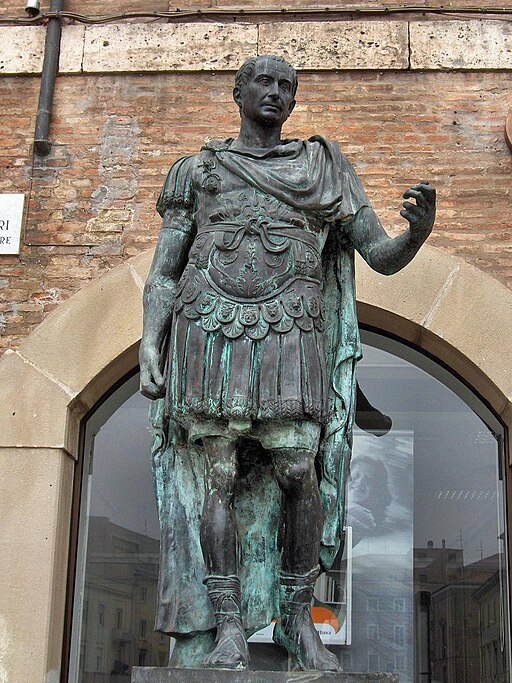 And into this
militarily successful but politically disturbed empire walked Julius Caesar, a
Roman whose family name has become the word for ‘king’ in German (with
‘kaiser’) and Russian (where it is ‘czar’), although Julius himself never was
one. After seven years spent battling
the Gauls in France, he eventually added that country to the Empire, making
himself very rich and popular with the people but a real risk to the power of
the Senate. He had been ordered to return to Rome before his conquest
of Gaul was complete, as the politicians in Rome were frightened of his growing
political importance at home, but each time refused. Finally, he did the
unthinkable: he crossed the River Rubicon, north of Rome, so breaking a rule
that no army could accompany its general to the capital (in case he grabbed power).
Many senators escaped the city and, on his return, Julius was asked three times
by the people to make himself emperor. Each time though, he refused … although,
his enemies believed, more and more reluctantly. In the end, he was famously
assassinated by friends and enemies alike. And civil war began… and of course
gave us two plays by Shakespeare, the legend of Antony and Cleopatra (who was
also the mistress of Julius, by the way, and had a son with him), and countless
other stories.
And into this
militarily successful but politically disturbed empire walked Julius Caesar, a
Roman whose family name has become the word for ‘king’ in German (with
‘kaiser’) and Russian (where it is ‘czar’), although Julius himself never was
one. After seven years spent battling
the Gauls in France, he eventually added that country to the Empire, making
himself very rich and popular with the people but a real risk to the power of
the Senate. He had been ordered to return to Rome before his conquest
of Gaul was complete, as the politicians in Rome were frightened of his growing
political importance at home, but each time refused. Finally, he did the
unthinkable: he crossed the River Rubicon, north of Rome, so breaking a rule
that no army could accompany its general to the capital (in case he grabbed power).
Many senators escaped the city and, on his return, Julius was asked three times
by the people to make himself emperor. Each time though, he refused … although,
his enemies believed, more and more reluctantly. In the end, he was famously
assassinated by friends and enemies alike. And civil war began… and of course
gave us two plays by Shakespeare, the legend of Antony and Cleopatra (who was
also the mistress of Julius, by the way, and had a son with him), and countless
other stories.
When the dust had settled, Octavius, Julius’ adopted heir, became emperor and called himself, Augustus, signaling an end to the Republic and rule by one individual, which lasted until 410 AD. Augustus was a hard-working, fair and reasonable ruler. His time as Emperor saw peace at home, economic prosperity, a golden age for literature, successful military campaigns in Germany and eastern Europe, and the start of the construction of the wonderful city of Rome as we know it today.
 Yet, not all
Augustus’ decisions can be said to be for the glory of Rome. He centralized
military power in himself and had a personal bodyguard that was so powerful
that it later decided who should be emperor. His political reach was greater
than all other posts combined. And, of course, nobody dared to
oppose him.
Sadly, the emperors who followed him were not all of the same upright
character. Tiberius was a cruel dictator who murdered his most popular generals
and handed over the government of his Empire to his bodyguard. Caligula had sex
with his sister, made his horse a Senator and murdered innocent men and women
alike … just for his own pleasure. Nero persecuted Christians and executed them by feeding
them to the lions in public. He also murdered his mother and, famously, played
his violin while Rome was burning down. These men were considered cruel even by
the Romans who were not the kindest of people themselves: in fact, kindness was
not seen as a positive characteristic. They left their unwanted daughters or
weak children on hilltops to die of cold, hunger or to be eaten by wild animals
– not all
abandoned babies could be as lucky as Romulus and Remus – or raised
them until they were old enough to be sold as slaves. They loved watching
bloody fights to the death between gladiators and crucified criminals – a long and
extremely painful form of execution. So, it took quite a lot for Romans to
think their emperor cruel!
Yet, not all
Augustus’ decisions can be said to be for the glory of Rome. He centralized
military power in himself and had a personal bodyguard that was so powerful
that it later decided who should be emperor. His political reach was greater
than all other posts combined. And, of course, nobody dared to
oppose him.
Sadly, the emperors who followed him were not all of the same upright
character. Tiberius was a cruel dictator who murdered his most popular generals
and handed over the government of his Empire to his bodyguard. Caligula had sex
with his sister, made his horse a Senator and murdered innocent men and women
alike … just for his own pleasure. Nero persecuted Christians and executed them by feeding
them to the lions in public. He also murdered his mother and, famously, played
his violin while Rome was burning down. These men were considered cruel even by
the Romans who were not the kindest of people themselves: in fact, kindness was
not seen as a positive characteristic. They left their unwanted daughters or
weak children on hilltops to die of cold, hunger or to be eaten by wild animals
– not all
abandoned babies could be as lucky as Romulus and Remus – or raised
them until they were old enough to be sold as slaves. They loved watching
bloody fights to the death between gladiators and crucified criminals – a long and
extremely painful form of execution. So, it took quite a lot for Romans to
think their emperor cruel!
 Yet, despite the fate of
the Empire resting in the hands of individual men, often miserably unsuited for
the role of Emperor, the achievements of the Romans were astonishing. They
built aqueducts
which carried water into cities over tens of miles of dry land. They introduced
irrigation of
crops. Anyone looking at pictures of Rome or Pompeii, destroyed by an
earthquake in the first century, has to marvel at their architecture. Many of
their roads survive two thousand years after they were built. They established law
and order over vast
territories and, often for decades, lasting peace and prosperity.
On the other hand, when they were betrayed, when colonies rebelled, they were ruthless though,
destroying whole civilizations and selling entire populations into slavery – as
they did the Jews.
Yet, despite the fate of
the Empire resting in the hands of individual men, often miserably unsuited for
the role of Emperor, the achievements of the Romans were astonishing. They
built aqueducts
which carried water into cities over tens of miles of dry land. They introduced
irrigation of
crops. Anyone looking at pictures of Rome or Pompeii, destroyed by an
earthquake in the first century, has to marvel at their architecture. Many of
their roads survive two thousand years after they were built. They established law
and order over vast
territories and, often for decades, lasting peace and prosperity.
On the other hand, when they were betrayed, when colonies rebelled, they were ruthless though,
destroying whole civilizations and selling entire populations into slavery – as
they did the Jews.
We perhaps admire these barbaric and cruel people because we can still see the signs of their civilisation all over Europe and the Middle East even today, but also as they recorded their own history against enemies who did not have written languages to give their versions of events. It is often said that the winner creates history but it can also be said that he must be able to write it in the first place!
If you want to watch some videos on this topic, you can click on the links to YouTube videos below.
If you want to answer questions on this article to test how much you understand, you can click on the green box: Finished Reading?
Videos :
1. The Founding of Rome (13:00)