

After the Russian Revolution of 1917, the Soviet Union became communist, different in every way from powerful capitalist nations, like the United States of America, Great Britain and France.
Biology and
Politics – Trofim Lysenko, Stalin’s Geneticist
 After the Russian
Revolution of 1917, the Soviet Union became communist, different in every way
from powerful capitalist nations, like the United States of America, Great
Britain and France.
After the Russian
Revolution of 1917, the Soviet Union became communist, different in every way
from powerful capitalist nations, like the United States of America, Great
Britain and France.
Capitalists
believe that the economy works best when it is left alone and that people only
work hard for their own benefit, but communists think governments should
control the economy so that everyone gets the advantage, not just the rich who
own the factories and have enough money to profit from
others. Gradually, communists thought, and perhaps some still believe,
people would evolve so that they would become
less greedy and more concerned about the welfare of
all.
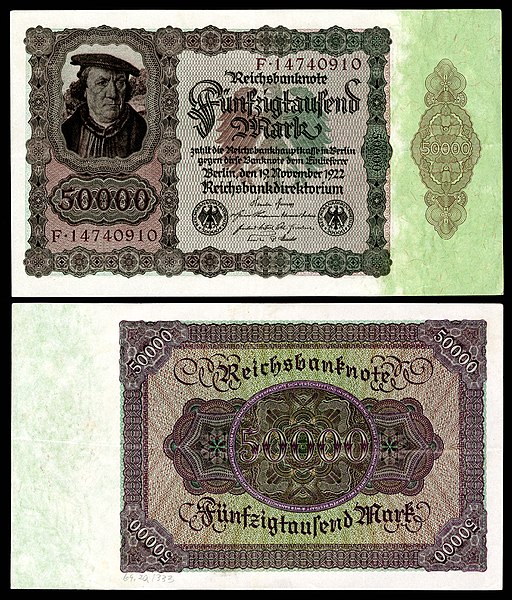 This may
seem outdated nowadays,
but capitalism looked likely to destroy itself in the 1920s: the Wall Street
Crash saw businessmen jumping to their deaths from tall buildings in major
American cities; British workers called a general strike so that the Army
had to supply essential goods and services to the population; and
Germans who were lucky enough to have jobs had to carry their salaries
home in suitcases because inflation was out of control.
This may
seem outdated nowadays,
but capitalism looked likely to destroy itself in the 1920s: the Wall Street
Crash saw businessmen jumping to their deaths from tall buildings in major
American cities; British workers called a general strike so that the Army
had to supply essential goods and services to the population; and
Germans who were lucky enough to have jobs had to carry their salaries
home in suitcases because inflation was out of control.
The communist
dream of a different society where nobody had to worry about food, work,
housing and health was surely better than the capitalist reality of hunger,
unemployment, cold and sickness.
In 1928, the new
leader of the Soviet Union, Josef Stalin, launched a government-controlled
five-year plan to push Russian industry and agriculture forward. This
was necessary to develop the country because it was a long way behind its
European neighbours and the USA. Stalin took away the land from small farmers
and made huge farms which could supply food for all the people.
 Although Stalin’s
scheme for industrialisation worked well and saw the Soviet Union quickly
become a major manufacturer, it was disastrous in terms of food production and
caused hunger – even death – across the Soviet Union. At the same
time, individual farmers and agricultural scientists were killed in their
hundreds of thousands when they did not reach the targets that their leader
wanted. Stalin’s dream of feeding the Russian population was about
to collapse.
Although Stalin’s
scheme for industrialisation worked well and saw the Soviet Union quickly
become a major manufacturer, it was disastrous in terms of food production and
caused hunger – even death – across the Soviet Union. At the same
time, individual farmers and agricultural scientists were killed in their
hundreds of thousands when they did not reach the targets that their leader
wanted. Stalin’s dream of feeding the Russian population was about
to collapse.
Trofim Denisovich
Lysenko was born in Ukraine in 1898, then part of the Russian Empire and, after
1917, just inside the western border of the Soviet Union. His parents
were poor farmers. He had little education and was not sorry for it. He often
said that he did not need large laboratories to do his biology experiments, just
a few flower pots kept in the warm. His working class background was
something that he constantly used in his career, so much so that Lysenko became
known as the “barefoot scientist”.
When other, more
careful scientists were worried about Stalin’s unrealistic goals for food
production and suggested to the leader that they were unscientific, Lysenko
offered solutions. He quickly became one of the Soviet Union’s most important
biologists. His more cautious colleagues, concerned about
unrealistic estimates of
future growth, were shot.
Yet, what made
Lysenko different from other scientists in the Soviet Union was his results.
They were promising, quick and simple. Where other scientists did experiment
after experiment, slowly building their knowledge through careful research,
Lysenko shouted about his success even before he had any results. His first
experiment was getting peas to grow in winter. Then, before anyone
could check if the peas were really growing as fast as he said, he
did the same with wheat. Again, he promised huge crops. This was better
than Stalin’s wildest dreams. The only difficulty was that no other scientist
could repeat Lysenko’s experiments and get the same happy results.
 An example of
Lysenko’s schemes to get food on the Russian table was his experiment with raising
rabbits. He suggested that these animals were the answer to the shortage of
meat and warm clothing and advised the government to give some to each family.
Rabbits were famous for the speed that they reproduced and would feed and
clothe the people in the icy winter months, when temperatures could fall to
minus twenty and thirty and nothing could grow. However, when there was nothing
for the people to eat, they gave nothing to the rabbits and so the animals
died. Billions were thrown away on this experiment, most of it because no
small-scale preparation took place. When failure came, it was at a huge
cost.
An example of
Lysenko’s schemes to get food on the Russian table was his experiment with raising
rabbits. He suggested that these animals were the answer to the shortage of
meat and warm clothing and advised the government to give some to each family.
Rabbits were famous for the speed that they reproduced and would feed and
clothe the people in the icy winter months, when temperatures could fall to
minus twenty and thirty and nothing could grow. However, when there was nothing
for the people to eat, they gave nothing to the rabbits and so the animals
died. Billions were thrown away on this experiment, most of it because no
small-scale preparation took place. When failure came, it was at a huge
cost.
 Nevertheless,
when millions upon millions of Soviet citizens were sent to their deaths –
often for no reason at all – Lysenko continued at the top of his profession
for decades, although one after another of his costly projects
failed. How did he manage? The answer is that he
successfully confused politics with science.
Nevertheless,
when millions upon millions of Soviet citizens were sent to their deaths –
often for no reason at all – Lysenko continued at the top of his profession
for decades, although one after another of his costly projects
failed. How did he manage? The answer is that he
successfully confused politics with science.
A contemporary of
Lysenko’s, the great Soviet biologist, Vavilov, travelled abroad, sharing his
thinking with scientists working in the capitalist west and using their work to
improve his own. Lysenko called him an enemy of communism and Soviet people.
Vavilov was arrested and sentenced to death in the early 1940s,
although he starved in prison in 1943 before he could be executed.
Many of Vavilov’s followers shared his end. Plant genetics did not recover from
this waste of scientific talent for twenty years in the
Soviet Union.
Ideological considerations even influenced science
itself. Stalin and Lysenko believed that biological evolution led
to progress, just as socialism followed and was, therefore, better than
capitalism. In a bizarre experiment in 1948, Lysenko arranged
for families in Siberia, the coldest region of the country, to
plant seeds of the same type of tree next to each other, even though
this meant there was not enough space for them all to grow healthily.
He believed that
weaker trees would ‘commit suicide’ so that the stronger ones would survive
and grow strong. This was, of course, a lunatic development of Darwin’s
‘survival of the fittest’ theory, that the best examples of a species live,
while the weaker ones die. Needless to add, in 1952, nearly all the trees
were dead. Yet, Lysenko’s idea was a mirror of Stalin’s belief that the present
generation needs to suffer for future ones. Trees commit
suicide to enrich later generations of
trees.
 And then, of
course, there was Stalin’s refusal to use science that came from the capitalist
west. He ordered a group of nuclear physicists to make the atom bomb without
using Einstein’s equations. When they eventually complained that
there was no other way to produce them, Stalin agreed but said that they would
all be shot later so that nobody would find out how they were made.
And then, of
course, there was Stalin’s refusal to use science that came from the capitalist
west. He ordered a group of nuclear physicists to make the atom bomb without
using Einstein’s equations. When they eventually complained that
there was no other way to produce them, Stalin agreed but said that they would
all be shot later so that nobody would find out how they were made.
In 1948, Lysenko
was no longer a scientist, but the Director of the Institute of Genetics at the
Soviet Academy of Sciences. Even after Stalin’s death in 1953, he managed to
keep his job for a decade.
In 1935, Lysenko, the pseudo-scientist, was given the job of destroying harmful agricultural ideas. He sent hundreds of scientists who did not think like he did to their deaths. He is, of course, considered a fraud. By contrast, the name of his colleague, Vavilov, who starved to death in prison, is used for the All-Russia Institute of Plant Industry and his face has appeared on stamps.
If you want to watch some videos on this topic, you can click on the links to YouTube videos below.
If you want to answer questions on this article to test how much you understand, you can click on the green box: Finished Reading?
Videos: