

Those words were used by UN Secretary-General Antonio Guterres, to describe the Rohingya a couple of years ago. He was not using them lightly. According to the United Nations High Commission for Refugees, 723,000 people have fled from Arakan Province in Burma since August, 2017, into Bangladesh. Sheikh Hasina has even put the number of Rohingya refugees living in or near Cox’s Bazar at 1.1 million.
The Rohingya – “one of, if not
the, most discriminated people in the world"
Those words were used by UN Secretary-General Antonio Guterres, to describe the Rohingya a couple of years ago. He was not using them lightly. According to the United Nations High Commission for Refugees, 723,000 people have fled from Arakan Province in Burma since August, 2017, into Bangladesh. Sheikh Hasina has even put the number of Rohingya refugees living in or near Cox’s Bazar at 1.1 million.
 Conditions in
the camps are
dreadful. They are overcrowded, lack fresh running water and
reasonable living standards, including access to health care and education. The
Bangladeshi government only allows children of primary school age to study in
the country; older children and young adults who should be in secondary
education or at university are not allowed to follow either the Myanmar or
Bangladesh curriculum.
The Government of Bangladesh is worried that, if they attend schools or follow
courses here, they will not wish to return to Burma. The newspapers are also
full of stories – many motivated by racism – about the import of drugs
like yaba, marijuana and others to Bangladesh (although how this is possible
when the Rohingya are afraid of returning to Burma is never explained). Anyway,
there can be no doubt that the Bangladesh authorities and people see the
refugees as unwelcome guests. And, of course, the Burmese have shown again and
again that they do not regard them as citizens or want them back within their
borders.
Conditions in
the camps are
dreadful. They are overcrowded, lack fresh running water and
reasonable living standards, including access to health care and education. The
Bangladeshi government only allows children of primary school age to study in
the country; older children and young adults who should be in secondary
education or at university are not allowed to follow either the Myanmar or
Bangladesh curriculum.
The Government of Bangladesh is worried that, if they attend schools or follow
courses here, they will not wish to return to Burma. The newspapers are also
full of stories – many motivated by racism – about the import of drugs
like yaba, marijuana and others to Bangladesh (although how this is possible
when the Rohingya are afraid of returning to Burma is never explained). Anyway,
there can be no doubt that the Bangladesh authorities and people see the
refugees as unwelcome guests. And, of course, the Burmese have shown again and
again that they do not regard them as citizens or want them back within their
borders.
 But, if you
think that this crisis has happened suddenly, you are very wrong. The identity
of the Rohingya – even the name itself – has been in doubt for centuries. The
term Rohingya was used before the British Indian Empire. In
1799, Francis
Buchanan included “Rooinga” to describe “Mohammedans who have long settled
in Arakan” in an article on Burmese languages. However, according to Jacques
Leider, a modern historian of the area, the Rohingya were called
"Chittagonians" during British colonial times, and it was even usual
to call them "Bengalis" until the 1990s. Leider believes ‘Rohingya’
is a name linked to a political movement starting in the 1950s to call for
"a Muslim zone with decision-making powers" in Rakhine. Still, after
Burma achieved independence in 1948, the first Prime Minister of the country, U
Nu, used the word as one that could unify the Burmese people near the East Pakistan
border.
But, if you
think that this crisis has happened suddenly, you are very wrong. The identity
of the Rohingya – even the name itself – has been in doubt for centuries. The
term Rohingya was used before the British Indian Empire. In
1799, Francis
Buchanan included “Rooinga” to describe “Mohammedans who have long settled
in Arakan” in an article on Burmese languages. However, according to Jacques
Leider, a modern historian of the area, the Rohingya were called
"Chittagonians" during British colonial times, and it was even usual
to call them "Bengalis" until the 1990s. Leider believes ‘Rohingya’
is a name linked to a political movement starting in the 1950s to call for
"a Muslim zone with decision-making powers" in Rakhine. Still, after
Burma achieved independence in 1948, the first Prime Minister of the country, U
Nu, used the word as one that could unify the Burmese people near the East Pakistan
border.
Whatever the politics of the term before, its use now divides people. The government of Myanmar has not used it since the troubles began and, in the 2014 census, people were forced to identify themselves as “Bengali”.
But it is not just a word that
separates people. There is no agreement on who first lived in Arakan. Ancient
Arakanese documents state that there were Buddhists living in and ruling the
area 5,000 years ago, while Sanskrit ones say that Hindus were the first inhabitants. The British historian, Daniel Hall, believed that the Burmese
did not arrive until the tenth century after Christ, making the original local
people Indian. We also know that Arab traders were regular visitors as long ago
as the third century and, around 788, the first Arab Muslims settled in Arakan, importing Islam, converting and even marrying locals
until Islam had a permanent place. Yet, this does not mean
that Muslim identity was typical of the region as there are also records of
early contacts with the Buddhist Mauryan Empire from Bengal.
 Whoever was in Arakan first,
what is sure is that King Mrauk U was forced out of Arakan in 1406 and managed
to escape to Bengal, from where – after nearly a quarter of a century – he
attacked and conquered his homeland in 1430 with Bengali Muslim support. Yet,
it was these Muslim soldiers who accompanied King Mrauk U that were given land
and set up homes there. Arakan became a colony of Muslim Bengal, used Bengali
coins and paid taxes to the Sultan. Even after the death of Sultan Jalaluddin
Mohammed Shah in 1433 and the invasion of Chittagong by Arakenese soldiers, the
Arakans continued to use Muslim titles (like ‘Sultan’), employ
Muslims in their governments and copy the rulers of the Sultanate – right up to
1666, when they were forced out of Chittagong after a two-century stay.
Whoever was in Arakan first,
what is sure is that King Mrauk U was forced out of Arakan in 1406 and managed
to escape to Bengal, from where – after nearly a quarter of a century – he
attacked and conquered his homeland in 1430 with Bengali Muslim support. Yet,
it was these Muslim soldiers who accompanied King Mrauk U that were given land
and set up homes there. Arakan became a colony of Muslim Bengal, used Bengali
coins and paid taxes to the Sultan. Even after the death of Sultan Jalaluddin
Mohammed Shah in 1433 and the invasion of Chittagong by Arakenese soldiers, the
Arakans continued to use Muslim titles (like ‘Sultan’), employ
Muslims in their governments and copy the rulers of the Sultanate – right up to
1666, when they were forced out of Chittagong after a two-century stay.
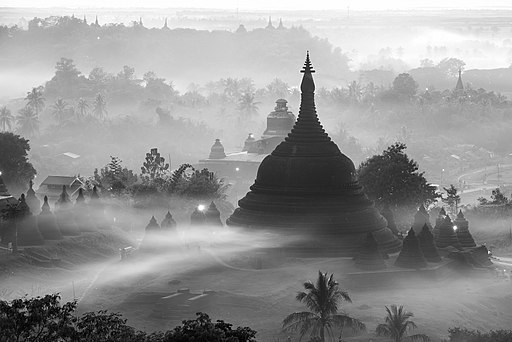 In fact, it was this closeness
between the Bengalis and Arakans that eventually led to the Emperor Aurangzeb
punishing the small kingdom. Prince Shah Shuja, the Governor of Bengal and
brother of the Emperor, raised arms against him at the Battle of Kajwa in
1660. He lost and Shuja only just managed to escape to Arakan and ask for
protection… which he got, but his powerful brother sent the next Governor of
Bengal, Shaista Khan to attack in 1666, seizing Chittagong from the Burmese
and making the northern part of Arakan a colony.
In fact, it was this closeness
between the Bengalis and Arakans that eventually led to the Emperor Aurangzeb
punishing the small kingdom. Prince Shah Shuja, the Governor of Bengal and
brother of the Emperor, raised arms against him at the Battle of Kajwa in
1660. He lost and Shuja only just managed to escape to Arakan and ask for
protection… which he got, but his powerful brother sent the next Governor of
Bengal, Shaista Khan to attack in 1666, seizing Chittagong from the Burmese
and making the northern part of Arakan a colony.
120 years later, in 1785, the Burmese Konbaung Dynasty conquered Arakan and executed thousands of Muslims, many more of whom rushed to the protection of the British Raj in Chittagong. The Burmese invasion was short-lived because the British occupied it and, almost immediately, populated it with Bengali Muslims to farm the rich soil. This continued throughout the 19th century, so that it was hard to know which of the Muslim settlers had historic roots in Arakan and which were there for financial benefits. Whatever the case, this mass migration was hated by the local Buddhist Arakanese who believed their ancient land and customs were lost. In the 1930s, there were serious and very violent riots against these ‘Bengali’ Muslims living on Arakan land.
When the Japanese invaded in the Second World War (1939-45), the local Buddhist Arakanese supported them, while the Muslims were in favour of the British. Both world powers armed their supporters but the guns were more often used against locals than their imperial masters.
Things did not stop there though. After the Second World War came to an end in 1945 and the independence of Pakistan two years later, Muslim Arakanese asked Mohammad Ali Jinnah, leader of the new state, to accept Arakan into East Bengal. They were worried about their future in an independent and Buddhist Burma. The British too were concerned about a nationalist Buddhist government. However, the plan never became a reality because Jinnah said he could not interfere in the internal affairs of Burma.
 In fact, when
Burma did become independent in 1948, the policies of Prime Minister U Nu were
friendly towards the Muslim minority. In 1954, for instance, he gave a speech
where he praised the loyalty of the Burmese Muslims to their Buddhist
government. He even used the word ‘Rohingya’ to describe them.
In fact, when
Burma did become independent in 1948, the policies of Prime Minister U Nu were
friendly towards the Muslim minority. In 1954, for instance, he gave a speech
where he praised the loyalty of the Burmese Muslims to their Buddhist
government. He even used the word ‘Rohingya’ to describe them.
Yet, in 1962,
the military under the leadership of General Ne Win, seized power and the security of
Burmese Muslims was again in doubt. Racism towards
“Indian” people became part of the nationalist agenda. The military
government nationalized
all property, including many businesses owned by the Burmese Indian community.
Between 1962 and 1964, 320,000 Burmese Indians were forced to leave the
country.
In
1978, Operation King Dragon was launched to distinguish Burmese nationals from
foreigners. This was the first major organised attack on the Rohingya. National
Registration Cards (NRC) were taken away by civil servants and never replaced.
The violence forced 200,000 Rohingya to flee to Bangladesh, but this country refused the
refugees entry and blocked food supplies, leading to the deaths of 12,000 of
them. The Bangladesh government protested about "the expulsion by force of thousands of
Burmese Muslim citizens to Bangladesh". The Burmese government replied
that those expelled
were Bangladesh citizens who were living illegally in Burma. In July 1978,
after negotiations with the UN, Ne Win's government agreed to take back 200,000
refugees who settled
in Arakan. In the same year as well as in 1992, a joint
statement by the governments of Myanmar and Bangladesh "acknowledged
that the Rohingya were lawful Burmese residents”.
 Yet, in 1982, a new citizenship
law did not list the Rohingya as one of the 135 "national races"
of Burma and called these “Bengalis” “foreigners”. This made the Rohingya
population stateless in their homeland of Arakan. In 1989, the
generals officially changed the name of Burma to Myanmar and, a few years
later, Arakan became Rakhine, a name linked to Buddhists in the area.
Yet, in 1982, a new citizenship
law did not list the Rohingya as one of the 135 "national races"
of Burma and called these “Bengalis” “foreigners”. This made the Rohingya
population stateless in their homeland of Arakan. In 1989, the
generals officially changed the name of Burma to Myanmar and, a few years
later, Arakan became Rakhine, a name linked to Buddhists in the area.
In 2012, Rakhine State saw riots encouraged
by the Burmese government asking Rakhine men to defend their "race and
religion". On both sides, entire villages were completely destroyed and
thousands lost their lives. In 2017, the current crisis which has displaced
nearly a million Rohingya and forced them into ‘temporary’ camps in and around
Cox’s Bazar, erupted.
The United Nations has called this “a textbook example of ethnic cleansing”. In
2020, the U.N.’s top court demanded that the Burmese government should protect
its Rohingya minority but the Army and new democratic government answer that
they are only fighting to defeat terrorists and civilians are not harmed.
Even the Nobel Peace Prize-winning Aung San Suu Kyi, previously the darling of
freedom fighters the world over, has defended the Burmese government, rejecting
allegations that the Rohingya are targeted and attacked.
 Meanwhile Rohingya refugees continue to
arrive in Bangladesh, telling stories of the murders even of children, stories
which are supported by NGOs. Although an agreement was reached between
Bangladesh and Myanmar in 2018, the refugees do not believe they will be safe
if they return to Arakan. After all, discrimination
against the group is now the norm. There are restrictions on marriage, family planning, employment,
education, religious choice, and freedom of movement. For example, Rohingya
couples in the northern towns of Maungdaw and Buthidaung are only allowed
to have two children. Rohingya must also get permission to marry, which may
require them to bribe authorities and provide photographs of the bride without
a headscarf and the groom with a clean-shaven face. To move to a new home or
travel outside their towns, Rohingya must get government agreement. There is no
Rohingya Member of Parliament in Myanmar, in fact no Muslim MP at all.
Meanwhile Rohingya refugees continue to
arrive in Bangladesh, telling stories of the murders even of children, stories
which are supported by NGOs. Although an agreement was reached between
Bangladesh and Myanmar in 2018, the refugees do not believe they will be safe
if they return to Arakan. After all, discrimination
against the group is now the norm. There are restrictions on marriage, family planning, employment,
education, religious choice, and freedom of movement. For example, Rohingya
couples in the northern towns of Maungdaw and Buthidaung are only allowed
to have two children. Rohingya must also get permission to marry, which may
require them to bribe authorities and provide photographs of the bride without
a headscarf and the groom with a clean-shaven face. To move to a new home or
travel outside their towns, Rohingya must get government agreement. There is no
Rohingya Member of Parliament in Myanmar, in fact no Muslim MP at all.
In such circumstances, how can the Rohingya feel safe at home in Arakan? Yet, in Bangladesh, the government refuses Rohingya children above the age of 12 any education. There is no employment either but a very great deal of anger against the refugees shown by the local population in Cox’s Bazar! The Rohingya truly are “one of, if not the, most discriminated people in the world”.
If you want to watch some videos on this topic, you can click on the links to YouTube videos below.
If you want to answer questions on this article to test how much you understand, you can click on the green box: Finished Reading?
Videos:
1. The Rohingya Crisis explained (07:11)
2. Rohingya History in Chronological Order (05:27)
3. Inside a Rohingya Refugee Camp In Bangladesh: Ground Report (12:20)
4. Bangladesh: Rohingya Migrant Crisis (06:00)
5. Inside the Rohingya Refugee Crisis (03:59)
6. Operation King Dragon (01:20)
7. Aung San Suu Kyi Defends Mayanmar Against Rohingya Genocide Accusations (09:32)