

Alcohol is part of European culture and tradition. Ten thousand-year-old jugs have been discovered in many parts of the world showing traces of strong beer. Since the Ancient Greeks, we have used it not just for pleasure but as the basis of perfumes and medicines. It is at the heart of Christianity, where it is used as part of the most important celebration of Jesus Christ’s promise to humanity of eternal life. What’s more, for hundreds of years, beer and wine were a much healthier alternative to water, which often carried disease, so that children went straight from their mothers’ milk to weak beer. (We should remember that beer contained about 1% alcohol before the nineteenth century, whereas it is typically not less than 4% today.)
Drug Usage through the Ages
 Alcohol is part
of European culture and tradition. Ten thousand-year-old jugs have
been discovered in many parts of the world showing traces of strong beer.
Since the Ancient Greeks, we have used it not just for pleasure but as the
basis of perfumes and medicines. It is at the heart of Christianity, where it
is used as part of the most important celebration of Jesus Christ’s
promise to humanity of eternal life. What’s more, for hundreds of
years, beer and wine were a much healthier alternative to water, which often
carried disease, so that children went straight from their mothers’ milk to
weak beer. (We should remember that beer contained about 1% alcohol before the
nineteenth century, whereas it is typically not less than 4% today.)
Alcohol is part
of European culture and tradition. Ten thousand-year-old jugs have
been discovered in many parts of the world showing traces of strong beer.
Since the Ancient Greeks, we have used it not just for pleasure but as the
basis of perfumes and medicines. It is at the heart of Christianity, where it
is used as part of the most important celebration of Jesus Christ’s
promise to humanity of eternal life. What’s more, for hundreds of
years, beer and wine were a much healthier alternative to water, which often
carried disease, so that children went straight from their mothers’ milk to
weak beer. (We should remember that beer contained about 1% alcohol before the
nineteenth century, whereas it is typically not less than 4% today.)
Nevertheless,
even bearing
in mind the lower alcoholic content of beer, it is, perhaps,
surprising that every British sailor was allowed about five litres of beer a
day and the average Swede drank forty times as much in the seventeenth century
as he does now.
 But it was in the
sixteenth century that spirits were first distilled as a business,
although in Scotland and Ireland whisky (or ‘whiskey’ as it is spelled by the
Irish) had been made for home consumption for centuries. In fact, at
the very beginning of the seventeenth century, the British Parliament passed a
law encouraging their production and sale. At this time, ‘jenever’ was distilled from juniper berries in
Holland and called ‘geneva’ and, later, gin in England. The sale of this spirit
in Britain jumped from a million litres in 1685 to nearly forty million by
1742, most of it drunk in London alone. One in four houses in the capital sold
gin around that time and, luckily perhaps, drunkenness was more socially
acceptable than it is today. It was the drink of the poor, who used it to
manage their long working days, but was also popular with the rich who alternated it
with beer, wine and brandy from France.
But it was in the
sixteenth century that spirits were first distilled as a business,
although in Scotland and Ireland whisky (or ‘whiskey’ as it is spelled by the
Irish) had been made for home consumption for centuries. In fact, at
the very beginning of the seventeenth century, the British Parliament passed a
law encouraging their production and sale. At this time, ‘jenever’ was distilled from juniper berries in
Holland and called ‘geneva’ and, later, gin in England. The sale of this spirit
in Britain jumped from a million litres in 1685 to nearly forty million by
1742, most of it drunk in London alone. One in four houses in the capital sold
gin around that time and, luckily perhaps, drunkenness was more socially
acceptable than it is today. It was the drink of the poor, who used it to
manage their long working days, but was also popular with the rich who alternated it
with beer, wine and brandy from France.
 This changed soon
afterwards though, mainly because of the improving quality and falling prices
of beer and greater taxation of gin. However, there were other reasons too: tea
and coffee became more widely available and, most importantly, drunkenness
was disrupting factory
work schedules. There were other social problems too: high crime and child mortality
rates were blamed on alcohol consumption. The traditional Christian message
that alcohol was one of God’s many gifts to humankind but that excess was
the work of the Devil gradually shifted to calls for
complete abstinence.
These reached their logical conclusion in the United States in 1919, when the
sale of alcohol – but not drinking it – was made a criminal offence. Parts of
Canada and Australia also banned alcohol and Scandinavia still has very
harsh
laws about where and when it can be sold. (For instance, the sale of beer was
illegal in Finland until 1989.)
This changed soon
afterwards though, mainly because of the improving quality and falling prices
of beer and greater taxation of gin. However, there were other reasons too: tea
and coffee became more widely available and, most importantly, drunkenness
was disrupting factory
work schedules. There were other social problems too: high crime and child mortality
rates were blamed on alcohol consumption. The traditional Christian message
that alcohol was one of God’s many gifts to humankind but that excess was
the work of the Devil gradually shifted to calls for
complete abstinence.
These reached their logical conclusion in the United States in 1919, when the
sale of alcohol – but not drinking it – was made a criminal offence. Parts of
Canada and Australia also banned alcohol and Scandinavia still has very
harsh
laws about where and when it can be sold. (For instance, the sale of beer was
illegal in Finland until 1989.)
The problem with Prohibition was
that most people were never in favour of it. Most famously, in the US the ban on
selling alcohol allowed the Mafia and gangsters, such as Al Capone, to make huge profits
from importing it from Canada, with all the associated problems this
suggests, such as widespread murder and intimidation. Eventually, at the end
of 1933, Prohibition ended
in America.
 Alcohol remains
illegal in many Islamic countries today, but also in parts of India, such as
Gujarat, the birthplace of Mahatma Gandhi. In 2012, the sale of any drink
containing more than 20% alcohol was banned in the Czech Republic because of
high rates of alcohol poisoning.
Alcohol remains
illegal in many Islamic countries today, but also in parts of India, such as
Gujarat, the birthplace of Mahatma Gandhi. In 2012, the sale of any drink
containing more than 20% alcohol was banned in the Czech Republic because of
high rates of alcohol poisoning.
Of course, when
we refer to ‘drugs’, controlled ones such as marijuana, cocaine and the
opiates, including heroin, as well as party drugs such as ecstasy, come to mind more
readily
than alcohol. Yet, their use was once as acceptable, if not as widespread,
as drink. When tea, coffee and even chocolate were first introduced into
Britain, their use was widely debated, as it was not thought proper for
civilised people to adopt the habits of barbarian populations (in Asia
as well as the Americas). These doubts disappeared as their use was
slowly anglicised –
such as by mixing tea and coffee with milk and drinking these in places
specially set up for their consumption, like coffee houses. There were also
social taboos linked
to the use of some drugs: women smoking cigarettes was unacceptable, for instance,
and upper-class men limited their use of tobacco to certain rooms in the house
or the garden so that women would not see them. When Oscar Wilde walked onstage
in London smoking in the last decade of the nineteenth century, the audience
thought it outrageous.
 Yet, at the same
time, the British never tried to interfere with local customs in distant parts of
their empire. Dr. Johnson, the writer of the first dictionary in English, saw
no difference between the average Londoner with his gin and the Turk with his
opium pipe, and the smoking of hashish and opium was tolerated all over India.
Yet, at the same
time, the British never tried to interfere with local customs in distant parts of
their empire. Dr. Johnson, the writer of the first dictionary in English, saw
no difference between the average Londoner with his gin and the Turk with his
opium pipe, and the smoking of hashish and opium was tolerated all over India.
In fact, hashish,
cocaine and opium were accepted in Britain until after the First World War,
when drugs became associated with prostitution. They had had a long
and socially acceptable history in the country. For instance, a little-known
fact is that sticking plasters to stop bleeding and prevent wounds
from becoming dirty were soaked in marijuana (both to clean cuts
and reduce pain) until 1925.
 Humphry Davy, the
late eighteenth century scientist responsible for discovering more chemical
elements than anybody before or since, used nitrous oxide (or laughing gas)
throughout his life. In fact, it killed him eventually, as he had expected it
would many of his patients if he were ever to introduce them to it. Yet, Davy,
along with his friends, such as Dr. Roget (who wrote the thesaurus that has his
name), the great poet Samuel Taylor Coleridge, and many others consumed
huge quantities of opium and nitrous oxide.
Humphry Davy, the
late eighteenth century scientist responsible for discovering more chemical
elements than anybody before or since, used nitrous oxide (or laughing gas)
throughout his life. In fact, it killed him eventually, as he had expected it
would many of his patients if he were ever to introduce them to it. Yet, Davy,
along with his friends, such as Dr. Roget (who wrote the thesaurus that has his
name), the great poet Samuel Taylor Coleridge, and many others consumed
huge quantities of opium and nitrous oxide.
Ether and chloroform
were soon added to the list and, although these had the added benefit that from
the 1850s they were used in surgical anaesthesia, they were also aids
to creating a party atmosphere for students. Of course, Davy and his
more intellectual friends did not only use these gases for a laugh. Davy
was appalled when
he asked a patient to whom he had just administered nitrous oxide how
he felt and got the reply that he didn’t exactly know, except that it was
strange. As Davy saw the drug as a means to greater psychic exploration and
appreciation of music, this was rather less than he had expected.
In the case of
opiates, Coleridge saw them as an escape from a fast-industrialising landscape
and the increasing management of his and everybody else’s time by a new social
order – in short, a way of dealing with the speed of change.
If anaesthetic
drugs and opium and its derivatives were the drugs of choice among
sections of the intellectual elite in Britain, the French were
more interested in hashish. This made its way into France for the
first time after Napoleon’s military adventures in North Africa. Just as Coleridge saw opium as an escape from
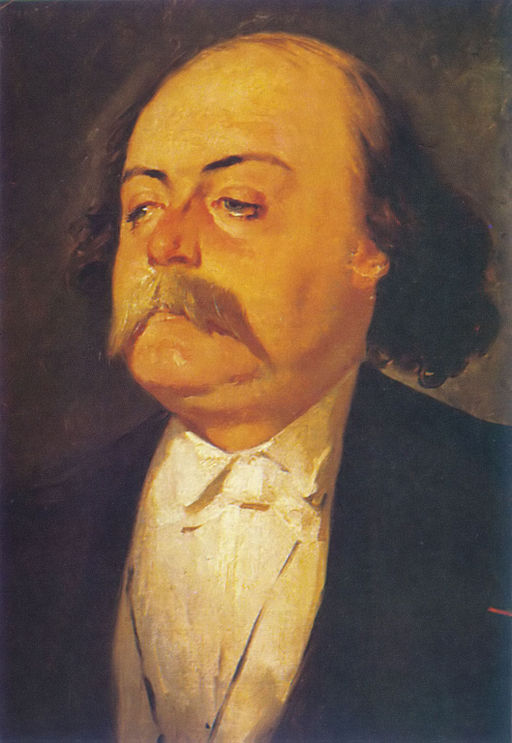
a life he did not understand and did not want, Gustave Flaubert, the grand old
man of French literature and author of the novel, ‘Madame Bovary’, loved
hashish. He saw it as coming from a primitive society that
had somehow kept the simplicity of life that was vanishing forever in France.
 Of course,
Coleridge and Flaubert were not the only artists interested in drugs. Edgar
Allan Poe (who used absolutely everything), Jack London (who preferred whisky)
and Wilkie Collins (who wrote and relaxed with laudanum (opium mixed with a
strong wine and spices) are all examples of the popularity of drugs
that today are seen as dangerous and are illegal nearly everywhere in the
world. And let’s not forget Sigmund Freud, the founder of psychoanalysis, who
used cocaine regularly every morning and evening for the insights it gave him into
his unconscious self.
Of course,
Coleridge and Flaubert were not the only artists interested in drugs. Edgar
Allan Poe (who used absolutely everything), Jack London (who preferred whisky)
and Wilkie Collins (who wrote and relaxed with laudanum (opium mixed with a
strong wine and spices) are all examples of the popularity of drugs
that today are seen as dangerous and are illegal nearly everywhere in the
world. And let’s not forget Sigmund Freud, the founder of psychoanalysis, who
used cocaine regularly every morning and evening for the insights it gave him into
his unconscious self.
Almost all the
drugs that we regard nowadays as dangerous – except for those like LSD and
Ecstasy which were only synthesised and popularised in the
twentieth century – had, then, been accepted in the eighteenth and,
especially, the nineteenth centuries. As an example, cocaine, which was
introduced into Britain in the 1880s, was so popular that the most popular
fictional character of the time, Sherlock Holmes, was a regular user. The
question is what happened to change the situation so that, soon after the First
World War, they were all criminalised. The answer is simple. While drugs were
used by the upper class they were accepted, but as soon as they became popular
among the working class, everything changed. In 1906, dancers from the States
brought cocaine over to England and soon it became associated with the seamier side
of life: promiscuity and
drugs became two sides of the same coin. What was tolerated among the
intellectual upper class could not be overlooked among the poor and legislation soon
followed.
Since that time,
despite the recommendations of numerous government reports, drugs have been
illegal and people have been fined or imprisoned for making choices
about what they do with their own bodies.