

If you plan on a career in research after graduation, it’s easy to forget that to do research you actually need funding. For public universities, the majority of the funding comes directly from the government or international agencies. It is nearly impossible for laboratories to survive on private donations, and even small cuts in government and international funding can be very damaging to scientific progress.
The Politics behind Science
 If you plan on a
career in research after graduation, it’s easy to forget that to do research
you actually need funding. For public universities, the majority of the funding
comes directly from the government or international agencies. It is nearly
impossible for laboratories to survive on private donations, and even small cuts in
government and international funding can be very damaging to scientific
progress.
If you plan on a
career in research after graduation, it’s easy to forget that to do research
you actually need funding. For public universities, the majority of the funding
comes directly from the government or international agencies. It is nearly
impossible for laboratories to survive on private donations, and even small cuts in
government and international funding can be very damaging to scientific
progress.
Knowing that the funding
for new technology, medicine and science comes from government offices that are
constantly changing personnel (like ministers, presidents and civil
servants) brings
up an interesting question: do political changes cause fluctuations in the amount of money
labs receive?
The answer is
simple: yes.
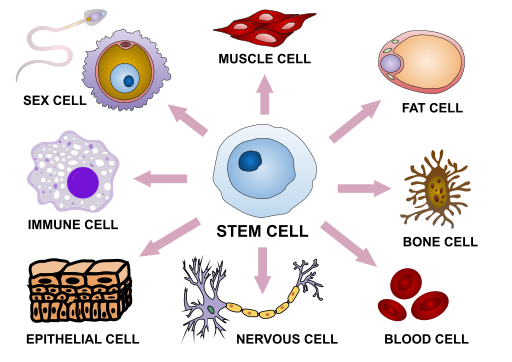 Political
leadership actually has a huge impact on science funding, and the coming years could
see a shift
in the number of grants and where money is allocated. An area where this change in political
power may be especially important is stem cell research. This is a new field
that could have enormous effects in medicine. At the University of Southern
California, a man who was paralyzed had stem cell therapy and eventually
recovered movement in his hands, for instance. Stem cells are currently
studied to treat heart, lung and brain disease, kidney failure, type 1 diabetes
and gastrointestinal issues.
Political
leadership actually has a huge impact on science funding, and the coming years could
see a shift
in the number of grants and where money is allocated. An area where this change in political
power may be especially important is stem cell research. This is a new field
that could have enormous effects in medicine. At the University of Southern
California, a man who was paralyzed had stem cell therapy and eventually
recovered movement in his hands, for instance. Stem cells are currently
studied to treat heart, lung and brain disease, kidney failure, type 1 diabetes
and gastrointestinal issues.
In 2001, US
President George W. Bush signed an order that prevented any government funding going
to stem cell research. This forced several labs to reduce their work, and had
profound
international effects. Before that, American researchers cooperated with
international partners to lead the world in stem cell research, but with the
loss of funding,
scientists from the U.S. were no longer valuable partners.
 Only a few months
after taking office in 2009, President Barack Obama passed an order to reverse
Bush’s policy. This action allowed scientists greater freedom in the number of
embryonic stem cells they were allowed to work with and returned government funding.
Only a few months
after taking office in 2009, President Barack Obama passed an order to reverse
Bush’s policy. This action allowed scientists greater freedom in the number of
embryonic stem cells they were allowed to work with and returned government funding.
Trump was more in
agreement with Bush’s views on stem cell research. Though Trump did not
publicly give a clear idea of his beliefs, Vice President Mike Pence stated
many times that he was morally opposed to it. The scientific community is expecting
new budget increases now that Biden has been elected in a field that is finally
starting to see progress
in treatments.
Another area
where funding
matters is the field of climate change. Obama allowed a large number
of power stations to run on clean, renewable energy through government grants.
He also reduced carbon and greenhouse gas emissions. It was not surprising to see a drop in
the amount of funding
for clean energy projects when Trump openly said climate change was fake news
from China. He removed some of the restrictions on emissions and wished to see a move
back towards using more coal.
 Although
we want to believe that science is an objective field built around research and facts,
it is undeniable
that the funding
behind it comes from personal or political beliefs. Given the current
divisive
political climate, it is unrealistic to expect areas of government funding to
continue as they are. Though it is difficult to know the impact such a dramatic ideological change in
government will have on the scientific community, doubtless we will see many shifts in
the years to come.
Although
we want to believe that science is an objective field built around research and facts,
it is undeniable
that the funding
behind it comes from personal or political beliefs. Given the current
divisive
political climate, it is unrealistic to expect areas of government funding to
continue as they are. Though it is difficult to know the impact such a dramatic ideological change in
government will have on the scientific community, doubtless we will see many shifts in
the years to come.