
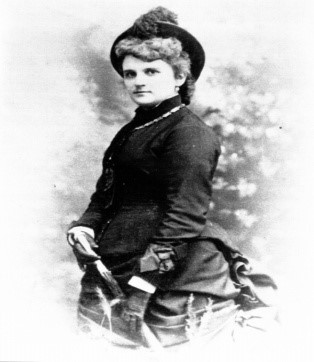
mother of Canadian descent. She married at twenty after a standard young woman’s education and, before she was thirty, had six children. Her husband’s business failed around that time, causing the family to move to Louisiana, where he managed others’ property and opened a general store. This was not enough, however, to pay his debts and, on his sudden death, Chopin was left penniless, forcing her to move back with her mother, who promptly died
Kate Chopin – Désirée’s Baby

Chopin took up writing to overcome her depression at the deaths of these much-loved figures so close together. She wrote novels at first: the most famous, ‘The Awakening’ (1899), is now highly regarded. However, the feminist ideas Chopin expressed were far ahead of their time and the book was widely seen as immoral. She turned to short stories, influenced by the French author, Guy de Maupassant, but never made much money from these either. She died of a brain haemorrhage in 1904. Her reputation as a major writer had to wait until the feminist movement of the 1960s and ‘70s.
Désirée’s Baby
It made her laugh to think of Désirée
with a baby. It seemed only yesterday that she was little more than a baby
herself; yesterday, when her husband, riding through the gate of his house, had
found her lying asleep in the shade.
The
little one woke up in his arms and began to cry for "Dada." That was
as much as she could do or say. Some people thought she might have arrived
there by
accident because she was a toddler. What most people believed though was that
she had been left on purpose 
by a group of Texans, who had used the
ferry, just below the plantation, late in the day. After a time, Madame
Valmonde stopped wondering and decided that Désirée had been sent to her by a
loving God to be the child she wanted to love because she had none of her own.
The girl grew up to be beautiful and gentle, affectionate and sincere – her
husband’s idol.
Mr. Valmonde grew practical and wanted
things to be well considered: that is, the girl's obscure birth. Armand looked
into her eyes and did not care. Her adoptive father reminded the
young man that she was nameless. But why was a name important when he could
give her one of the oldest and proudest in Louisiana? He ordered wedding
presents from Paris and tried to be patient until they arrived. Then they were
married.
Madame Valmonde had not seen
Désirée and the baby for four weeks. When she reached Armand’s home, she shuddered when
she saw it, as she always did. It was a sad looking place, which for many years
had not known the gentle hand of a woman. Old Mr. Aubigny married and buried
his wife in France. She had loved her own land too much to leave it. Big, oak
trees grew close to the house and their thick-leaved, far-reaching
branches shadowed it, letting little light enter. Young Aubigny was a strict
master too and his Negro slaves had forgotten how to be happy, as they had been
during the old master's easy-going lifetime.
The young mother was recovering slowly
from the birth and lay on a sofa. The baby was beside her on her arm, where he
had fallen asleep at her breast.
Madame Valmonde bent her heavy figure
over Désirée and kissed her, holding her tenderly for a moment in her
arms. Then she turned to the child.
"This is not the baby!"
she cried, in a startled voice.
"I knew you’d be astonished,"
laughed Désirée, "at the way he has grown. Look at his legs, mamma, and
his hands and fingernails – real fingernails. We had to cut them this
morning."
"And the way he cries," went
on Désirée, "is deafening. Armand heard him the other day as far away
as The White Woman's hut."
Madame Valmonde had never removed her
eyes from the child. She lifted it and walked with it over to the window that
was lightest. She examined the baby closely.
"Yes, the child has grown, has
changed," said Madame Valmonde, slowly, as she replaced it
beside its mother.
"What does Armand say?"
Désirée's face lit up with
happiness.
 laughed, and said Negrillon was a
devil. Oh, mamma, I'm so happy that it frightens me."
laughed, and said Negrillon was a
devil. Oh, mamma, I'm so happy that it frightens me."
What Désirée said was true. Marriage, and later the birth of his son had softened Armand Aubigny's exacting nature greatly. This waswhat made the gentle Désirée so happy because she loved him very much. When he frowned she trembled, but she still loved him. When he smiled, she asked for nothing more. But Armand's dark, handsome face had not often been disfigured by frowns since the day he fell in love with her.
When the baby was about three months
old, Désirée woke up one day with the idea that there was something menacing in
the air. It was at first too subtle to understand. It had only been a
worrying suggestion; a sense of mystery among the blacks; unexpected visits
from far-off neighbours who could not explain why they had come. Then a
strange, an awful change in her husband's behaviour, which she could not ask
him to explain. When he spoke to her, it was with averted eyes, from which
the love-light had gone out. He was often away from home, and when he was
there, he avoided
her and her child, without offering any excuse. And the Devil seemed suddenly
to control him when he managed the slaves. Désirée was miserable enough to die.
She sat in her room, one hot
afternoon, absent-mindedly playing
with her long brown hair that hung about her shoulders. The baby, half naked,
lay asleep on her own great bed. One of The White Woman’s little mixed-race
boys – half naked too – stood fanning the child slowly
with peacock feathers. Désirée's eyes had been fixed sadly on the
baby, while she was trying to understand the threats that she felt all around
her. She looked from her child to the boy who stood beside him, and back again.
"Ah!" It was a cry she couldn’t help, which she was not conscious of
making. Her blood turned to ice.
She tried to speak to the little
mixed-race boy, but no sound would come out at first. When he heard his name,
he looked up and his mistress was pointing to the door. He put down
the great, soft fan and crept away.
She stayed motionless, her gaze on her child,
and her face the picture of fright.
Soon afterwards, her husband entered
the room and, without noticing her, went to a table and began to search among
some papers.
"Armand," she called to him,
in a voice which must have stabbed him, if he was human. But he did not
notice.
"Armand," she said again.
Then she got up and moved towards him. "Armand," she said once more,
pulling his arm, "Look at our child. What does it mean? Tell me."
He coldly but gently loosened her fingers from about his arm and pushed the hand away from him. "Tell me what it means!" she cried.
 It means," he answered lightly,
"that the child is not white; it means that you are not white."
It means," he answered lightly,
"that the child is not white; it means that you are not white."
Quickly understanding all
that this meant for her gave her the courage to deny it. "It’s a lie; it’s
not true, I am white! Look at my hair, it’s brown; and my eyes are grey,
Armand, you know they are grey. And my skin is fair," grabbing his wrist.
"Look at my hand; whiter than yours, Armand," she laughed hysterically.
"As white as The White
Woman's," he replied cruelly and went away leaving her alone with their
child.
When she could hold a pen in her hand,
she sent a despairing letter
to Madame Valmonde.
"My mother, they tell me I am not
white. Armand has told me I am not white. For God's sake tell them it is not
true. You must know it is not true. I shall die. I must die. I cannot be so
unhappy and live."
"My own Désirée, Come home, back
to your mother who loves you. Come with your child."
When the letter reached Désirée she
went with it to her husband and put it open on the desk before him. She was
like stone: silent, white, motionless after she placed it there.
In silence he ran his cold eyes over
the written words.
He said nothing. "Shall I go,
Armand?" she asked in a voice, sharp with painful suspense.
"Yes, go."
"Do you want me to go?"
"Yes, I want you to go."
He no longer loved her, because of the
injury she had brought on his home and his name.
She turned away like one who had been
hit and walked slowly towards the door, hoping he would call her back.
"Good-bye, Armand,"
she moaned.
He did not answer her.
 Désirée went in search of her child. She took the little one from the nurse's arms with no word of explanation and walked away, under the oak branches.It was
an October afternoon; the sun was just going down. Out in the fields, the
Negroes were picking cotton. Désirée had not changed the thin white
dress nor the slippers which she wore. Her hair was uncovered and the
sun brought a golden shine to it. She did not take the broad road which led to
Valmonde’s far-off plantation. She disappeared among the trees that
grew thick next to the deep lake and she never came back again.
Désirée went in search of her child. She took the little one from the nurse's arms with no word of explanation and walked away, under the oak branches.It was
an October afternoon; the sun was just going down. Out in the fields, the
Negroes were picking cotton. Désirée had not changed the thin white
dress nor the slippers which she wore. Her hair was uncovered and the
sun brought a golden shine to it. She did not take the broad road which led to
Valmonde’s far-off plantation. She disappeared among the trees that
grew thick next to the deep lake and she never came back again.
Some weeks later there was a curious scene at Armand’s home. In the middle of the garden was a great bonfire. Armand sat in the wide hall to watch it and it was he who gave half a dozen Negroes the material to throw on this fire. A cradle, silk dresses, hats and gloves.

The
last thing to go was a tiny bundle of letters, innocent little notes that
Désirée had sent to him during the days of their marriage.There was still one
back in the drawer from which he had taken with the others. But it was
not Désirée's. It was part of an old letter from his mother to his father. He
had read it. She was thanking God for her
husband's love:
"But above all," she wrote,
"night and day, I thank God that our dear Armand will never know that his
mother, who adores
him, belongs to the race of slavery."