
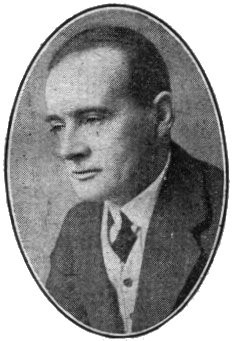
Hector Hugh Monro, an upper-class Englishman, is better-known by his pen name, Saki. He was born in 1870 and, after living for many years with two aunts (that he hated) in England, he returned to the country of his birth, Burma, to be a soldier in the British Army in 1893. Unfortunately, he became seriously ill with malaria and had to return to England after a year
Saki - Laura
 Hector Hugh Monro, an upper-class Englishman,
is better-known by his pen name, Saki. He was born in 1870 and, after living for many years
with two aunts (that he hated) in England, he returned to the country of his
birth, Burma, to be a soldier in the British Army in 1893. Unfortunately, he
became seriously ill with malaria and had to return to England after a year.
Hector Hugh Monro, an upper-class Englishman,
is better-known by his pen name, Saki. He was born in 1870 and, after living for many years
with two aunts (that he hated) in England, he returned to the country of his
birth, Burma, to be a soldier in the British Army in 1893. Unfortunately, he
became seriously ill with malaria and had to return to England after a year.
He took up writing
as a job and gave us some of the finest short stories in English, but once
again joined the army at the start of the First World War in 1914. He preferred
to fight as an ordinary soldier rather than an officer,
although he was well over the maximum age to be in the army. He was killed in
fighting in 1916. His last words to another soldier were: “Put out that bloody cigarette”,
before he was hit by a sniper’s bullet.
Laura
“You’re not really dying, are
you?” asked Amanda.
“I have the doctor’s permission to
live till Tuesday,” said Laura.
“But today is Saturday. This is
serious!” answered Amanda.
“I don’t know about serious but it
is certainly Saturday,” said Laura.
“Death is always serious,” said
Amanda.
“I never said I was going to die.
I think I am going to stop being Laura, but I shall go on being something else. Some kind of
animal, I suppose. You see, when you haven’t been very good in life, you come
back as a lower organism. And I haven’t been very good.
I’ve been petty and mean and vengeful and all that sort of thing when
it was necessary.”
“That sort of thing is never
necessary,” said Amanda quickly.
“If you don’t mind,” replied
Laura, “Egbert is that sort of thing I’m talking about. You’re married to him —
that’s different; you must love, honour, and put up with him: I’m not.”
“I don’t see what’s wrong with
Egbert,” complained Amanda.
“Oh, I’m sure the wrongness is my fault,” answered
Laura quietly, “he has just been an excuse. He made a great fuss, for instance, when I took the puppies
from the farm out for a run the other day.”
 “They chased his young Sussex chickens,
besides running all over the flower gardens. You know how he loves his chickens
and garden.”
“They chased his young Sussex chickens,
besides running all over the flower gardens. You know how he loves his chickens
and garden.”
“How could you?” asked Amanda.
“It came quite easily,” said
Laura; “two of the hens were laying eggs at the time, but I was firm.”
“And we thought it was an
accident!”
“You see,” began Laura again, “I
really have good reasons for thinking my next life will be as a lower organism. I’ll be an animal of some kind. On
the other hand, I haven’t been a bad sort in my way, so I think I’ll be a nice
animal, something sweet and lively, with a love of fun. An otter, perhaps.”
“I can’t imagine you as an otter,” said Amanda.
“Well, I don’t suppose you can
imagine me as an angel, either,” said Laura.
Amanda was silent. She couldn’t.
“I think an otter’s life could be enjoyable,”
continued Laura; “Fish to eat all year without waiting forhours till you can
catch one; and a slim body…”
“Think of dogs hunting otters,” said Amanda. “How
terrible!”
 “I’m not sure. Quite a lot of fun
with all the neighbours looking and, anyhow, not worse than this
Saturday-to-Tuesday business of dying slowly. And then I would be something
else. If I am quite a good otter, I suppose I could get back into
human shape; probably something primitive — a little brown, unclothed
Egyptian boy, Ithink.”
“I’m not sure. Quite a lot of fun
with all the neighbours looking and, anyhow, not worse than this
Saturday-to-Tuesday business of dying slowly. And then I would be something
else. If I am quite a good otter, I suppose I could get back into
human shape; probably something primitive — a little brown, unclothed
Egyptian boy, Ithink.”
“Be serious,” said Amanda; “You
really should be ifyou’re only going to live till Tuesday.”
As a matter of fact, Laura died on
Monday.
“So upsetting,” Amanda complained
to her uncle, Sir Lulworth Quayne. “I’ve asked a lot of people for golf and fishing,
and the roses are looking their best.”
“Laura always was thoughtless,”
said Sir Lulworth. “She was born during a really important Test match week,
with a government minister here in the house who hated babies.”
“She had the craziest ideas,” said Amanda.“Do you know if there is any madness in her family?”
“Madness? No, I never heard of any.”
“She had an idea that she was
going to come back as an otter,” said Amanda.
“You hear these things so often,
even in the West,” said Sir Lulworth, “that you can’t really call them mad. And Laura was a
strange person in this life. I wouldn’t like to make rules about what she could
do in the
afterlife.”
“You think she really might change
into some animal?” asked Amanda.
Just then Egbert entered the
breakfast room, looking so upset that Laura’s death could not be enough to
explain it.
“Four of my Sussex chickens are
dead,” he said, “the four that were to go to the show on Friday. One of them
was eaten right in the middle of that new flower garden that I’ve spent so much
money on. My best flower bed and my best chickens
destroyed. It almost seems like the animal knew how
to be as horrible as possible.”
“Was it a fox, do you think?” asked Amanda.
“No,” said Egbert, “there were
marks of webbed feet all
over the place, and we followed the tracks down to the stream at the bottom
of the garden; it was an otter.”
Amanda looked quickly and secretly
across at Sir Lulworth.
Egbert was too upset to eat breakfast,
and he went out to make the birds’ cage stronger.
 “Really Laura should wait till the
funeral is
over,” saidAmanda.
“Really Laura should wait till the
funeral is
over,” saidAmanda.
“It’s her own funeral, you know,”
said Sir Lulworth.
Next day, during Laura’s funeral and when the family was at the ceremony the remaining
Sussex chickens were killed and partly eaten. Most of the flower beds (but this
time also the strawberry beds) in the garden suffered.
“I’ll get the hunting dogs to come
here as soon as possible,” said Egbert.
“No! You can’t dream of it!”
shouted Amanda. “I mean, not so soon after a funeral in the house.”
“It’s necessary,” said Egbert.
“When an otter
starts that sort of thing, it won’t stop.”
“Perhaps it will go somewhere else
now there are no more chickens left,” suggested Amanda.
“It seems you want to protect the
animal,” said Egbert.
“There’s been so little water in
the stream lately,” complained Amanda. “It doesn’t seem fair to hunt an animal when it has
so little chance of escaping anywhere.”
“I’m not thinking about sport. I
want to kill the animal.”
During church the following
Sunday, the otter made its way into the house, stole
half a very expensive fish from the kitchen and tore it into little bits on
Edgar’s favourite carpet in his bedroom.
“It will hide under our beds and
bite pieces out of our feet before long,” said Egbert. From what Amanda knew of
this otter, she
felt that it might be possible too.
The evening before the hunt, Amanda
spent an hour walking by the stream, making what she imagined to be dog noises.
It was her friend and neighbour,
Aurora Burret, who brought her news ofthe day’s sport.
“Pity you weren’t there. We had quite a
good day. We found it at once in the pool just below your garden.”
“Did you kill it?” asked Amanda.
“Yes. A fine female otter. It badly bit your husband. Poor
animal! I felt quite sorry for it, it had such a human look in its eyes when it
was killed. You’ll call me stupid, but do you know who the look reminded me of?
My dear woman, what’s the matter?”
 When Amanda recovered from her nervous breakdown,
Egbert took her to the Nile to recover. The change of scene speedily improved her health. The adventures of an otter looking for a change of diet could not frighten her any more. Amanda’s normal calm
returned. Even a hurricane of shouts,coming
from her husband’s room in the hotel – in her husband’s voice, but not in his
usual vocabulary – did not disturb her as she
got ready for dinner one evening in a Cairo hotel.
When Amanda recovered from her nervous breakdown,
Egbert took her to the Nile to recover. The change of scene speedily improved her health. The adventures of an otter looking for a change of diet could not frighten her any more. Amanda’s normal calm
returned. Even a hurricane of shouts,coming
from her husband’s room in the hotel – in her husband’s voice, but not in his
usual vocabulary – did not disturb her as she
got ready for dinner one evening in a Cairo hotel.
“What’s the matter? What’s
happened?” she asked.
“The little devil has thrown all
my clean shirts out the window! Wait till I catch you, you little…”
“What little devil?” asked Amanda,
trying not to laugh.
“A little naked brown Egyptian
boy,” cried Egbert.
And now Amanda is seriously ill.