

People have tried to count time for about ten thousand years. The Abbasid scholar, Abu Raihan Mohammad ibn Ahmad Al-Biruni, wrote in the year 1000 a history of the calendars used by different religious groups and people. Many of these calendars used the moon as a way of telling the time. Of course, we all understand why. The moon was more important before we had electricity than it is nowadays and it made a great difference to people’s lives if there was a new moon or a full one. Other calendars used the stars.
Telling the Time – A History of Calendars

People have tried to count time for
about ten thousand years. The Abbasid scholar, Abu Raihan Mohammad ibn Ahmad
Al-Biruni, wrote in the year 1000 a history of the calendars used by
different religious groups and people. Many of
these calendars used the moon as a way of telling the time. Of
course, we all understand why. The moon was more important before we had
electricity than it is nowadays and it made a great difference to people’s
lives if there was a new moon or a full
one. Other calendars used the stars. These helped people to
understand when they should plant their crops and how to
get from one place to another, especially if they were travelling on ships and
needed to see it in order to navigate. But the calendar which most shaped Western
ones was made in Babylon (now Iraq) about three or four thousand years ago.

The Babylonians used 60 as
the basis for counting. This was useful because many numbers – ten,
in fact – are factors of 60: two, three, four, five, six,
ten, twelve, fifteen, twenty and thirty. If you compare it to 50, you
will see the advantages immediately: 50 only has four factors: two, five, ten and
twenty-five. It is because the Babylonians had this number base that we have
360 degrees in
a circle, that the angles of triangles all total
180° and that we have sixty seconds in a minute and sixty minutes in an hour.
The Babylonians had a
twelve-month calendar but also needed a very short thirteenth month.
This was important so that the winter months stayed in the winter and the hot
ones remained in the summer year after year. The Babylonians thought that this
short thirteenth month was unlucky and did not do any important work in it.
That is why, in western cultures, that number is still unlucky even today. They
also made seven-day weeks but, again, the seventh, fourteenth, twenty-first and
twenty-eighth days were not propitious. So, they made these days holidays
because working on an unlucky day was sure to make problems later.

The names of the Western months come from the
Greeks and Romans. The early Roman calendar only had ten months and
began in March. The second King of Rome added January and February later.
(Interestingly, February came before January at first but was changed later.) The
difficulty for the Romans was that they did not follow the moon and so, after a
few hundred years, their summer months were no longer in the summer. Julius
Caesar changed all that by making a year that lasted 445 days in 45
B.C., so that the months were again where they should be. He
also realised that a year of 365 days was not long enough. That’s why
every four years, there’s an extra day. We call these longer years ‘leap years’
in English. Julius Caesar’s changes to the calendar were
not popular. Some people thought he was assassinated in 44 B.C. because he
had made them.

But, even after Julius Caesar’s changes, the
year is still a little bit too short – eleven minutes too short, to
be exact. Christian countries kept the Roman calendar, which follows
the sun, but some of the most important festivals (like Easter) are lunar.
In the Christian religion, it has always been important
that Easter comes on exactly the same day each year, when the stars
and the moon are in the same place as the day when Jesus died. But the summer
months were once again coming earlier and earlier every year. The eleven-minute
shortfall
began to make a big difference as the centuries went by. In 1582, the Catholic
Pope, Gregory XIII decided to cut ten days out of the calendar in
October of that year to solve the problem. He was right. But that caused a lot
of difficulties too – taxes, rent payments and so on were all
confused. So, the financial year starts at a different time every year than
the calendar year. In the U.K., that is on 1st April.
Another difficulty with Pope
Gregory’s calendar was that not all countries were Catholic. England
and many other nations in northern Europe were
now Protestant and at war with the Catholic ones.
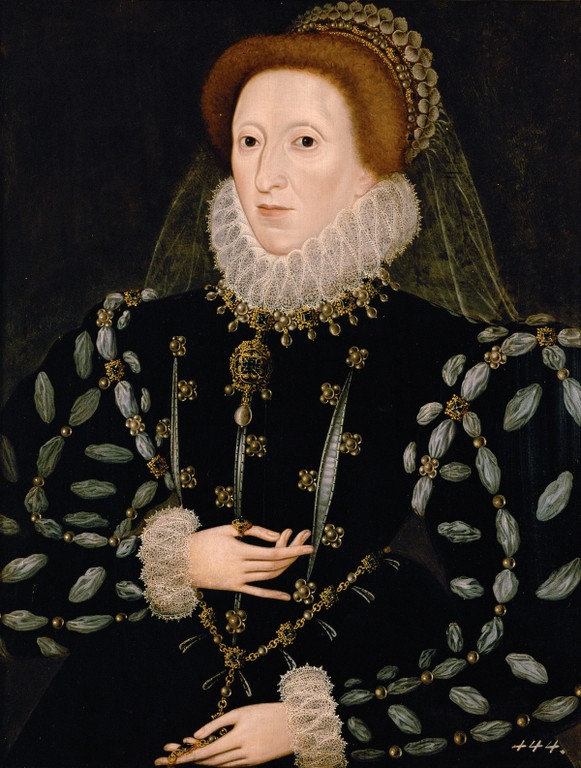
In Protestant England, Queen Elizabeth I asked her
best scientist, Dr. John Dee, to give his opinion. Dee agreed with
Pope Gregory but the English politicians thought the Pope was playing a
trick on them and, in the end, the
English calendar did not change with the Catholic countries. In fact,
it stayed the same until 1752. This meant that Europe had many
different calendars and travellers from one small country to another
had to change dates, just like we still have to change money from Bangladeshi
taka to Indian rupees when we go to Kolkata or Mumbai, and pounds sterling to
euros, when we cross borders between Bangladesh and India, from
Britain to France.
To make everything more confusing, early travellers to India and China found completely different calendars there too. (In 1953, the Government of India discovered people were using thirty different calendars in their country.) But it wasn’t just India that had problems.

There was no
international date until 1886, when some countries agreed to make a uniform system
everywhere. This line that separates one day from the next runs
through the middle of the Pacific Ocean (although it goes around Alaska and
some islands). But there are still problems. Countries decide their own times.
So, from the western side of Saudi Arabia to the eastern – a distance of more
than 2000 km – there is one time, but if you take the few steps into the
Emirates from that eastern border, the time is one hour later. Other countries
change their times because they don’t want the same ones as the countries next
door. This happens a lot if countries are unfriendly or want to show the world
that they are independent of their large and powerful neighbours. So,
in the eastern Indian states, like Manipur and Mizoram, the time is the same as
it is in Mumbai, the business centre of the country thousands of kilometres
away, but in Bangladesh next door to Mizoram, it’s half an hour forward but, and Nepal, only fifteen minutes ahead of India. It’s all very difficult. To make matters
worse, some northern countries change their times in the winter so
that it gets lighter an hour earlier in the morning and we don’t arrive at the
office when it’s still dark. This is to use all the daylight hours more efficiently.
Others don’t.
And, of course, not every country dates the
year 1 from the (incorrect) birth of Jesus. Many Islamic countries date it from
the year the Prophet Mohammad left Mecca for Medina in 622. The Iranians use a
different calendar again. The Islamic calendar is also lunar and
so the same month comes at different seasons of the year. The holy month
of Ramadan only comes in July every thirty-three years, for instance. In 2030,
Ramadan will be in January. Also, this calendar is only 354 or 355
days long – not 365. In Iran, the Western year 2014 was 1393; in Saudi Arabia,
it was 1435; in Bangladesh 1420.
In England, there was an old saying: “If you want to know the time, ask a policeman!” Sadly, it’s not so easy.
If you want to watch some videos on this topic, you can click on the links to YouTube videos below.
If you want to answer questions on this article to test how much you understand, you can click on the green box: Finished Reading?
Videos :
1. An Introduction to Al-Biruni (3:29)
2. Al-Biruni and his Contributions to Science (2:51)
3. The Babylonian Calendar (5:15)
8. Dr. John Dee, Queen Elizabeth I's Astronomer and Scientist (13:15)
9. The Islamic Calendar (6:18)
10. Differences of Hindu Calendar and Gregorian Calendar (1:34)
11. Why do We Change the Clocks? (8:42)
12. Calendars Around the World (14:13)