

In October 1347, a few merchant ships from the Far East arrived in the port of Messina on the island of Sicily, in the Mediterranean Sea just south of Italy. Four years later, up to 30 million people in Europe had died or about a tenth of the population of the entire world, a figure which would rise to 100 or even, some say, 200 million throughout the Middle Ages.
The Black Death - A History Darker than Darkness
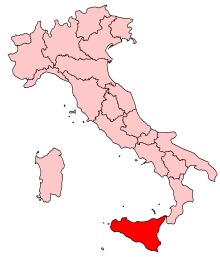
In October 1347, a few merchant ships from
the Far East arrived in the port of Messina on the island of Sicily, in
the Mediterranean Sea just south of Italy. Four years later, up to 30 million
people in Europe had died or about a tenth of the population of the entire
world, a figure which would rise to 100 or even, some say, 200 million
throughout the Middle Ages.
The cause was
an epidemic of plague, which came to be known as ‘the Black
Death’. It completely baffled doctors and scientists who had never
seen anything like it before and could offer no explanation of its cause.
Certainly, they could offer no hope for recovery to the infected or
useful advice on prevention to those who were still untouched by it. Boccaccio,
a writer who lived in Italy from 1313 to 1375, based his most famous work, ‘The
Decameron’ around the disease. He had this comment to make:
“In
those years, a dead man was no more important than a dead goat.”
Mortality rates varied from one country to the
next, but reached their highest points in Italy and Spain, where as many as
eighty per cent of the people died, while in England and Germany there were
still as many dead as one in five of the population, more in cities where
people lived close together. The plague spread first by sea and
travelled along coastal areas, as ships came and went, but soon made its way
inland by road and river until no part of Europe or the Middle East was
untouched. Geoffrey the Baker wrote this in his ‘Chronican Angliae’ about the
arrival of the disease in England:
“The
seventh year after it began, it came to England and first began in the towns
and ports on the sea coasts, … where … it made the country quite
empty of inhabitants so
that there were almost none left alive.
“...
At length it came … even to Oxford and to London and finally it spread over all
England and so wasted
the people that scarcely every tenth person of any sort was left
alive.”

The symptoms of
the plague were terrible. First, the limbs began to ache. Then,
sufferers showed a rash on their skin, often on their faces,
around the necks, under their arms and at the tops of their legs. These tiny
spots sometimes developed into swellings the size of eggs or even
apples and were extremely painful. Patients had dreadful headaches; they
sneezed, coughed and vomited. Within a couple of days, most were dead. The only
hope of recovery was if the swellings broke open and the liquid in them
was washed away. But this almost never happened in the first few years.
People died in their homes and were
only discovered when the stench of their rotting corpses reached
their neighbours’ homes. There were dead bodies everywhere in city streets and
on roads leading to the countryside, where people hoped to escape the disease
but often became ill before they had gone far. Great holes were dug everywhere
and the dead thrown in together and hastily covered with earth, as the
graveyards quickly filled and other sites had to be found for much-loved
children and respected leaders.
The plague did not respect the
wealth of the nobility, the scientific knowledge of doctors or
the belief of priests. Young and old, from city or countryside, rich and poor
all died in startling numbers and with terrifying speed. An Italian
man from the town of Siena, Agnolo di Tura, wrote this in his diary in 1350:
“They
died by the hundreds, both day and night, and all were thrown in ... ditches and
covered with earth. And as soon as those ditches were filled, more were
dug. And I, Agnolo di Tura ... buried my five children with my own
hands ... And so many died that all believed it was the end of the world.”
People did not trust their doctors who,
in the early months of the plague, admitted they were as confused as everyone else
about the disease. Plague doctors were, anyway, second-rate (if they had any medical
training at all) and could not usually earn a living. They cut their
patients so that they lost blood in the hope that this would reduce their
fevers. They also put frogs on the patients’ swellings.

Obviously, very few people wanted to
be plague doctors, despite the high pay, as the life expectancy was
very short (although Nostradamus did the job and survived). Instead, people who
could not rely on the medical profession bought pamphlets which pretended to
understand treatment for the sick and advised the healthy how to prevent infection.
These gained such popularity that they became the first example of popular
literature, read by anyone who was literate.
If people had no faith in medicine, some
turned to religion with new enthusiasm, seeing the disease as a punishment for
their own sins or those of the entire community or even humankind.
They joined groups walking the streets and beating themselves with sticks
and whips until
their backs were a mess of blood, in an attempt to get forgiveness
for their sins and avoid the fate that had already overtaken so many
members of their families, their neighbours and friends. At the height of the
crisis, there were as many as eighty thousand people taking part in these
desperate attempts to escape the disease.
Others gave vast sums of money for the building
of colleges and other institutions so that they should not be forgotten after
their deaths, but also because they had nobody left to leave their money to. In
this way, for instance, more than one university college at Oxford and
Cambridge was built.
Where people could not afford to build
a lasting memorial for
themselves, they grouped together to pay, so that for the first time in
history, public buildings were not only the responsibility of the king and
nobles.

Of course, these monuments were not only built so
that the living would remember the people who had built them, but often their
loved ones taken from them so suddenly and painfully by the disease, and thrown
into mass graves without the comfort of religion to ease their passing.
A public building was, perhaps, a way to show the dead they were remembered and
missed.
Still others began
to ignore the law and social rules. Theft increased dramatically, as people were no
longer so worried about getting caught and punished. Of course, this was partly
because the authorities had more important matters that were taking
up their time, like burying the dead, and so did not give priority to preventing
crime. However, there was also a feeling among some people that every moment of
happiness had to be enjoyed because it might be the last. This meant that there
were public displays of affection in the streets, not just kisses
stolen, but groups of people having sex as others walked by on their way to
work or the shops.
Finally, there were, as ever, those who
could only make sense of the black terror of these days by blaming and killing
others. One of the first groups of victims was those already suffering from
some sickness that affected the skin. The rich often accused the poor,
complaining that their laziness, their lack of cleanliness or
their immoral ways of living had, in one way or another, caused the
disaster.
The Jews were thought to have poisoned
the rivers of Europe and were accused of causing the epidemic. Many, many
were murdered even though the Pope pointed out that
the plague was killing many in England too, where there were no Jews,
and that it made no sense for the Jews to poison the water that they had to
drink themselves.
Of course, none of this changed the
progress of the disease. It continued for four years and destroyed whole
communities. The Church was especially affected, as priests had tried to offer
comfort to the dying and to the families they left behind them and so were more
easily infected.
There were food shortages as there were
not enough farm workers to plant crops or look after animals. Prices for basic
supplies and wages paid to workers rocketed and more rabbits
and fish were eaten throughout Europe as they could be more easily caught and
cooked.
The plague was not bad news
for everyone though. Some farmers became wealthy when they bought land for
almost nothing all over Europe or simply occupied their neighbours’ fields as there was
no-one left to care for them.
The first epidemic of
the plague ended in 1351, but that was not the last of it. In
different parts of Europe, it returned for shorter or longer periods until the
end of the eighteenth century. The victims changed though. By the fourth outbreak of
the disease as the fourteenth century came to an end, nine out of ten of the
dead were children. Adults had begun to become immune.
In 1350, anyone catching the disease
was dead within a week, most in a couple of days. As new outbreaks occurred,
fewer were infected and
more sufferers recovered. Doctors started to have more confidence in themselves
and believed their treatments effective.

Yet, it was not until the twentieth
century that the causes of plague and the way it was transmitted were
understood. Medieval scientists and doctors believed it was carried in the air
or was caused by unusual astronomical events. In fact,
the plague came from rats. They were bitten by fleas that then
became infected.
As the fleas became ill in their turn, they could not feed from the blood and
so bit more and more animals and people, each time passing some of the bacteria
from the rats’ into their new victims’ blood streams. In this way, people
became ill.
Although the plague is often
seen as a medieval disease, there was an outbreak as recently as 1994 in
Gujarat in western India, in which 52 people died. It is also worth pointing
out that the first case of plague which cannot be treated by
antibiotics has been identified in Madagascar.
And, of course, now we have experienced the corona virus. New diseases occur all the time!
If you want to watch some videos on this topic, you can click on the links to YouTube videos below.
If you want to answer questions on this article to test how much you understand, you can click on the green box: Finished Reading?
Videos :
1. Plague 101 | National Geographic (4:16)
2. Secrets of the Black Death (5:05)
3. The Black Death: the World's Most Devastating Plague (1:30)
4. What Made the Black Death (the Plague) so Deadly? (10:57)