

In July of 1994, the news broke around the world that the president of North Korea had just died. This was no surprise: he was eighty-two years old. What did surprise people all over the globe were the extraordinary scenes of grief. Already, for outsiders, this was a rare look inside a closed country. Pyongyang, the capital, seemed sterile and unwelcoming with its huge concrete buildings and very wide avenues almost without traffic.
Kim
Il Sung, Great Leader of North Korea
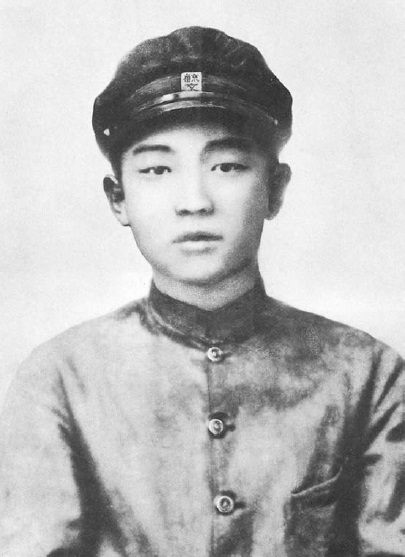
In July of 1994, the news broke
around the world that the president of North Korea had just died. This was no
surprise: he was eighty-two years old. What did surprise people all over the
globe were the extraordinary scenes of grief. Already, for outsiders, this
was a rare
look inside a closed country. Pyongyang, the capital, seemed sterile and
unwelcoming with its huge concrete buildings and very wide avenues
almost without traffic.
The people, too, looked other-worldly. Chronic famine had
left most thin, and everyone, every single person, was wearing a very simple
'Mao' suit, shapeless and functional – grey for the workers,
green for the many soldiers and blue for top Communist Party officials.
All of this was strange to non-Koreans
watching but even stranger were the scenes of people throwing themselves
to the ground, crying loudly, hitting themselves, pulling their hair out – all
in public, millions of Koreans, and all because of the death of their 'Dear
Leader', President Kim Il Sung.
What kind of man, on his death, could
cause these great scenes of public emotion? And why did the country he had built,
the Democratic Republic of North Korea, seem so different than anywhere else on
earth?

Kim Il Sung was not even his real name
(which is
a matter of debate among experts). He had taken it from
another, older Korean guerrilla leader during the 1930s when they had
been fighting the Japanese who had invaded and colonised Korea in 1910.
'Kim' was born two years after this
into a farming family. A lot of his past was re-written when he became president
for life but it seems his family was lower middle class: definitely not rich
but not really poor either. Kim claimed they were always one step ahead of poverty. In fact,
middle class or not, they were often just one step ahead of starvation as (possibly deliberate)
mismanagement of the food supply by the Japanese wartime government killed off
hundreds of thousands in the north of Korea. Many Koreans crossed the Yalu
River into Manchuria to escape the hunger. Kim's family went too.
He grew up in Manchuria, learning Chinese and forgetting quite a lot of his native Korean tongue. It was here, too, that the teenaged Kim became interested and actively involved in the socialist and communist politics that, in those years, were the topic of discussion all around him.

He joined a small, socialist party of about thirty men but the Manchurian police took only a couple of months to arrest them all. Kim went to prison for several months. When he came out, he soon joined the official Chinese Communists and was involved in guerrilla operations along the Korean border.
Kim had spent about a year in a
military academy and was quickly promoted to lead a group of a few hundred guerrilla
fighters. They enjoyed some small successes against the Japanese at a time when
few in China or Korea could get the better of the aggressive and
well-trained Japanese soldiers. But, by 1940, his luck had changed for the
worse and, along with a few dozen survivors from his band of hundreds, he crossed the
Manchurian border into the Soviet Union to ask the Russians for sanctuary and
help.

He was received with open arms by the
communist regime
of Joseph Stalin. Kim, at once adopted the attitude of the admiring little brother, taking
on Soviet policies and happily treating Stalin as a god-like figure to be
obeyed and imitated.
When his turn came to lead his country, Kim became just like Stalin, or worse.
At the very end of the Second World
War, in August,1945, Stalin declared war on the Japanese, joining the British
and American fight against them now that Hitler and Germany had been
defeated. No sooner had he done this than the Americans dropped two
atomic bombs on Japan, causing the Japanese suddenly to surrender. In the peace settlement,
Stalin was asked to occupy the northern half of Korea, which bordered
China and the Soviet Union. America would occupy the southern half of Korea, nearer to
Japan.
This U.S./Soviet occupation of Korea was meant to
last just a few years, until the Koreans could form a national government. But,
what kind of government would it be? Determined to win the country for communism
(and Russian influence), the Soviets immediately prepared Kim as the new
leader, backed the
Korean communists, north and south, and started to persecute non-communist
politicians.

Seeing this, the U.S. started
to put in place a new Republic of South Korea. They asked a deeply
anti-communist Korean, Syngman Rhee, who had lived in America most of his life,
to be the president. He spoke perfect American English and was surrounded by
U.S. political agents. Both sides now had a puppet dictator in place,
heading a government that suited their own needs and not those of the Korean
people.
The border closed between the two
halves of Korea and any idea of nationwide elections fell by the wayside when the
Americans realised that the communists would win any fair, democratic contest.
No-one could say when the country might be united again.
However, Kim thought he knew. He had
begun planning an all-out ground attack on the South. A lightning
strike that would see his new, Soviet-equipped army take the lower half of
the country in days. Kim took his plan to his master, Stalin, who not only
agreed to it but went on to reassure Kim that recent Soviet spy reports indicated
that the U.S., secretly, no longer planned to defend the South in the event of
trouble; and, that the U.S.-backed South Korean army was pathetically weak.
If Kim's attack was successful, he would be leader of all Korea, and Stalin would
add to his growing Soviet empire.

On the 25th of June, 1950, North Korean
soldiers poured
across the new border, regiment after regiment, and began to force
back the South Korean forces which proved weaker even than predicted by
Kim and Stalin's spies. To Kim's surprise, the Americans decided to rush an
American army over from their garrison in Japan. They managed to hold just
one port, Pusan, and a little of the surrounding countryside. From here, they
re-supplied and reinforced and there now followed three years
of war, running up and down the Korean peninsula.
The Americans and some other nations
come to help under a U.N. flag, were very successful at first but took their counter-invasion
of the North right up to the Chinese border on the Yalu River in what the
American general, MacArthur, always intended to be a threatening gesture to
communist China.
The Chinese, after giving strong
diplomatic warnings, invaded the North and drove the U.S. and U.N
forces all the way back down South. The Americans now counter-attacked and retook the
South but, having learned a little respect for the Chinese, stopped in and
around the original dividing line where both sides now dug trenches across
the Korean peninsula from
coast to coast.
The fighting continued and certain
important hills and bridges were the scene of constant battle but the front line
never really moved after this. And so it went on for two more years.

In 1953, peace talks were finally
arranged and, in an atmosphere of intense hostility and suspicion, a line
was drawn across the country following the trench lines. You couldn't call it 'peace' but
there was, at least, an 'absence of war'. The division of Korea became permanent
and, as Korean soldiers from both sides faced one another across the new
border, both the Americans and the Soviets started strengthening the positions of their
preferred puppet
government. South Korea, after a couple of decades, became a little more
democratic and enjoyed an economic boom, partly engineered by the Americans.
In the North, Kim remained Stalin's
'boy' until the Russian’s death, and the split between the Soviets and the Chinese in the
early 1960s drove him into the Chinese sphere of influence. He had, after all,
grown up there. But, even his ties to the Chinese were weak and got weaker. Kim
seemed determined to introduce a hard form of communism with no
private property at all and no family rights. His dreams of a centrally
planned, socialist economy providing modest comfort and happiness for all turned into famines,
mass arrests and death camps. Only the 1970s Pol Pot regime in Cambodia was
worse and that collapsed
in just a few years. Kim stayed in power for more than half a
century.

His police and prisons kept the common
people in order but Kim also guaranteed their loyalty by building a 'cult of the
personality' around himself just as his hero, Stalin, had done in
his time. It took on a religiosity as vast icons of Kim appeared
everywhere, smiling, handsome and confident.

Little children at school sang songs
of praise to him as other children in other places are taught to sing
about God. He was the greatest man who had ever lived, North Koreans were told,
and his birthday became a national holiday. His past was rewritten, his insignificant guerrilla
activities in the 1930s became timeless military victories – he alone had
organised victory over the Japanese in Korea.
With absolutely no outside contacts or information, the North Korean people were shaped from the moment they were born by this constant propaganda and Kim became, for them, something like a great Chinese emperor: one of the gods. His supposed goodness and perfection were influenced by perceptions of Jesus Christ among Koreans, many of whom are Christians. Kim's family had been very devout and, so, it was surely no accident.

Even the collapse of the Soviet Union and,
with it, the end of the communist block did not change anything in
North Korea. The North Korean people were never officially told of how the
outside world had changed. So, when Kim finally died in 1994, the scenes
of exaggerated public
grief
were the result of more than half a century of his growing personality cult but, many have
suggested, at least some of the North Koreans were play-acting, knowing
that anything less than extreme sadness at the tragic news could invite a
violent attack.
After his death, Kim was named 'Eternal President' and his son, Kim Jong Il, took over just as a prince takes the crown when his father, the king, dies. Korea remains the same to this day – a severe, communist regime, like a fossil from the mid-twentieth century. And the Kim dynasty continues. When Kim Jong Il died in 2011, his son took over, making no real changes to the system his grandfather had put in place.
If you want to watch some videos on this topic, you can click on the links to YouTube videos below.
If you want to answer questions on this article to test how much you understand, you can click on the green box: Finished Reading?
Videos :
1. Kim Il-sung: the Supreme Leader (3:21)
2. Korea Under Japanese Rule 1931 (3:11)
3. 1949 Kim II Sung asks for Stalin's Backing (3:01)
5. Why did America Fight the Korean War? (4:53)
6. Kim Il Sung's Cult of Personality (2:52)
7. North Korea Celebrates Kim Il-Sung's Birthday as the day of the Sun (0:32)
8. She Tells her Story on why she Fled away from North Korea (6:46)
9. People Crying at Funeral of Kim Jong II (2:29)
10. How Cruel Is North Korean Leader Kim Jong-Un? (7:05)