

The ready-made garment industry accounts for 80% of Bangladesh’s exports nowadays and is the largest source of foreign exchange earnings for the country. However, this is not the first time that Bengal has depended on textiles for state revenues. During the Mughal period, Bengal was the richest region of India because of its textile (and ship building) industries. Dhaka, with a larger population than London or any other European city, at one million inhabitants, had 80,000 skilled textile workers. 50% of all textiles and 80% of silk imported by the Dutch came from Bengal, for instance. Other sectors were quick to realize the profits they might earn from textiles too. Farmers, between 1600 and 1650, started to grow mulberries for silk production and cotton for the textile market. Muslin too was so often linked to Bengal that, in many countries, the material was actually called not ‘muslin’ but ‘daka’. In fact, the whole of India depended on Bengal’s thriving economy – most of whose revenues were from textiles.
The Ready-Made Garment Industry in Bangladesh
 The ready-made
garment industry accounts for 80% of Bangladesh’s exports nowadays and is the
largest source
of foreign exchange
earnings for the country. However, this is not the first time that Bengal has
depended on textiles for state revenues. During the Mughal period, Bengal was the
richest region of India because of its textile (and ship building) industries.
Dhaka, with a larger population than London or any other European city, at one
million inhabitants, had 80,000 skilled textile workers. 50% of all textiles
and 80% of silk imported by the Dutch came from Bengal, for instance. Other
sectors were quick to realize the profits they might earn from textiles too.
Farmers, between 1600 and 1650, started to grow mulberries for silk production and
cotton for the textile market. Muslin too was so often linked to Bengal that,
in many countries, the material was actually called not ‘muslin’ but ‘daka’. In
fact, the whole of India depended on Bengal’s thriving economy – most of whose revenues were
from textiles.
The ready-made
garment industry accounts for 80% of Bangladesh’s exports nowadays and is the
largest source
of foreign exchange
earnings for the country. However, this is not the first time that Bengal has
depended on textiles for state revenues. During the Mughal period, Bengal was the
richest region of India because of its textile (and ship building) industries.
Dhaka, with a larger population than London or any other European city, at one
million inhabitants, had 80,000 skilled textile workers. 50% of all textiles
and 80% of silk imported by the Dutch came from Bengal, for instance. Other
sectors were quick to realize the profits they might earn from textiles too.
Farmers, between 1600 and 1650, started to grow mulberries for silk production and
cotton for the textile market. Muslin too was so often linked to Bengal that,
in many countries, the material was actually called not ‘muslin’ but ‘daka’. In
fact, the whole of India depended on Bengal’s thriving economy – most of whose revenues were
from textiles.
 Yet, the Battle
of Plassey in 1757 put an end to this booming industry. The East India Company, which
had its own private armies numbering as many as 100,000 soldiers, took control
of Bengal and forced the region to export raw materials to Britain, where they were not
taxed as foreign imports, and made textile factories to convert these into clothing. Of
course, they needed skilled Indian textile workers to show them how to do this
but there were many artisans who, seeing the closure of the Bengali
textile industry at home, were more than happy to earn the high salaries
offered in Britain. Very soon, Bengalis were forced to buy clothing made from
cotton grown in their own fields but manufactured in Manchester and Sheffield thousands
of miles away. This de-industrialisation of Bengal was to cause many
difficulties for the population later and was a part of the legacy of two centuries of British
rule in the sub-continent. Perhaps, some of you will know that Mohandas Gandhi
burnt British clothes and encouraged Indians to use their own home-spun
cloth instead of wearing imported garments as one part of his fight to force
the British out of India.
Yet, the Battle
of Plassey in 1757 put an end to this booming industry. The East India Company, which
had its own private armies numbering as many as 100,000 soldiers, took control
of Bengal and forced the region to export raw materials to Britain, where they were not
taxed as foreign imports, and made textile factories to convert these into clothing. Of
course, they needed skilled Indian textile workers to show them how to do this
but there were many artisans who, seeing the closure of the Bengali
textile industry at home, were more than happy to earn the high salaries
offered in Britain. Very soon, Bengalis were forced to buy clothing made from
cotton grown in their own fields but manufactured in Manchester and Sheffield thousands
of miles away. This de-industrialisation of Bengal was to cause many
difficulties for the population later and was a part of the legacy of two centuries of British
rule in the sub-continent. Perhaps, some of you will know that Mohandas Gandhi
burnt British clothes and encouraged Indians to use their own home-spun
cloth instead of wearing imported garments as one part of his fight to force
the British out of India.
 In 1947, after
India had gained its independence from Britain, it seemed there was an
opportunity for East Bengal (soon to become East Pakistan) to start its textile
industry up again. However, there were many challenges: in the first place, there were no
longer any skilled textile workers in Bengal. The British had seen to
that. Next, very few textile or jute factories were actually owned by East
Pakistanis. Both mill proprietors and artisans were imported from West
Pakistan, which meant, of course, that workers’ salaries and any profits made
also headed west to Karachi, Lahore and Islamabad. Until the mid-1960s, two
thirds of Pakistan’s GDP came from Pakistan but state expenditure in East
Bengal / Pakistan was often less than half that. What, then, did it matter if
the garment and jute industries were re-born? Bengal did not get much benefit
from it anyway.
In 1947, after
India had gained its independence from Britain, it seemed there was an
opportunity for East Bengal (soon to become East Pakistan) to start its textile
industry up again. However, there were many challenges: in the first place, there were no
longer any skilled textile workers in Bengal. The British had seen to
that. Next, very few textile or jute factories were actually owned by East
Pakistanis. Both mill proprietors and artisans were imported from West
Pakistan, which meant, of course, that workers’ salaries and any profits made
also headed west to Karachi, Lahore and Islamabad. Until the mid-1960s, two
thirds of Pakistan’s GDP came from Pakistan but state expenditure in East
Bengal / Pakistan was often less than half that. What, then, did it matter if
the garment and jute industries were re-born? Bengal did not get much benefit
from it anyway.
As West Pakistani employers did not provide vocational training for Bengali employees, East Pakistanis worked in unskilled jobs. This created a problem once again after 1971, when the West-Pakistani owned factories shut down when the owners fled back to their part of the country. There was nobody who could operate the machinery necessary to produce garments. As the international market for jute was decreasing and prices falling though, there was no choice except to adapt to textiles.
Bangladeshi governments after 1971 focused on export-oriented industries so as to earn foreign exchange. At first, jute and tea were the main products sold abroad but this soon changed as more and more land was lost to the sea and it looked like land-based crops were not going to sustain the country. Sheikh Mujib’s socialist government privatized all the larger garment factories under the Bangladesh Industrial Enterprises (Nationalisation) Order of 1972, but these were never as profitable as the capitalist businesses run by West Pakistanis before the Liberation War. In fact, every fiscal year after 1975-76, the textile industry lost money. After the 1974 Bengal Famine, the government-owned Bangladesh Textile Mills Corporation (BTMC) started to sell off the 85% of all equipment and factories it owned. That year, the National Investment Policy was passed by Parliament, allowing local and foreign investors to buy shares in government industries.
 In 1978, the
first foreign export order – 10,000 ready-made shirts – was placed by Pakistan.
There were, however, only nine export-focused textile factories in the whole
country at that time. The advantages of exports soon became obvious
to all though and, in 1982, the National Privatisation Policy returned all
textile and jute mills to their previous owners.
In 1978, the
first foreign export order – 10,000 ready-made shirts – was placed by Pakistan.
There were, however, only nine export-focused textile factories in the whole
country at that time. The advantages of exports soon became obvious
to all though and, in 1982, the National Privatisation Policy returned all
textile and jute mills to their previous owners.
These days, the garment industry has changed completely. By 2002, it accounted for 77% of Bangladesh’s exports and, three years later, was the country’s only multi-billion dollar business, earning 75% of its export income. Nineteen out of every twenty garment factory owners were locals too.
The industry has been much helped by international trade deals, pushing it to the second largest textile exporter in the world after China, which is still losing customers to Bangladesh because of its increasing labour costs. The 1974 U.S. Multi Fibre Arrangement meant that the textile industry was one of the most regulated in the world. It set quotas on the imports allowed from every nation, except Bangladesh. This meant that South Korean companies, for example, moved their factories here, providing more revenue for the state and more employment for the workers.
In 2009, the United States introduced The Tariff Relief Assistance for Developing Economies Act for the fourteen least developed countries, allowing them to export garments to the American market if they were produced here without paying any import taxes. This continued for a ten-year period until 2019.
The export of ready-made garments in 1981 amounted only to $3.5 million but, twenty-five years later, was $10.7 billion – not bad news if you were an investor in the early days of the industry.
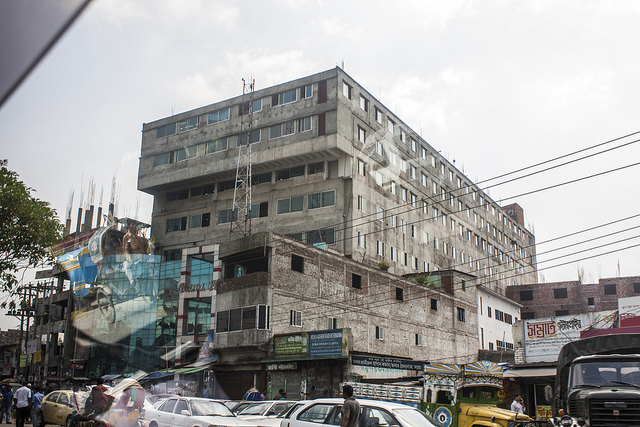 Yet, there are
other advantages too: 85% of garment workers are illiterate women from villages who,
otherwise, would be working as poorly-paid, often badly treated domestic
staff in the homes of the rich, with no employment contracts or rights. The
garment industry, while not heaven on Earth, has changed that. Of course, there
have also been very serious setbacks, such as the Rana Plaza tragedy in 2013,
in which 1,134 garment workers died and more than double that number were
seriously injured. There have been other accidents as well, where basic health
and safety measures have been ignored – fires, collapsed buildings, and more.
Yet, there are
other advantages too: 85% of garment workers are illiterate women from villages who,
otherwise, would be working as poorly-paid, often badly treated domestic
staff in the homes of the rich, with no employment contracts or rights. The
garment industry, while not heaven on Earth, has changed that. Of course, there
have also been very serious setbacks, such as the Rana Plaza tragedy in 2013,
in which 1,134 garment workers died and more than double that number were
seriously injured. There have been other accidents as well, where basic health
and safety measures have been ignored – fires, collapsed buildings, and more.
Following Rana Plaza, President Obama announced that all preferential treatment to Bangladesh, such as tax breaks, was suspended. Many multinational companies also applied pressure, threatening to withdraw contracts unless the country improved its health and safety regulations and punished those who broke them. Until 2013, no factory was ever taken to court for violating these rules. With Rana Plaza, all that changed and forty-one arrest warrants were issued for murder.
 Just when
everything seemed to be back to normal, the corona virus hit. In March 2020,
all non-essential industry was told to close by the government in an effort to
stop the spread of the epidemic. There are currently three million women working directly in
garment factories and hundreds of thousands more people depending on it for
importing raw
materials from India and China and selling these on to the
factories. According to an April report on the BBC, multinational companies
have not been very helpful to the local garment industry, as retailers
in the European Union and North America have cancelled orders because their
shops are closed. There are even reports that good arriving at their destinations
have not been accepted or paid for, even though the order was made and the
ships set off for Europe before the pandemic began. One factory owner in
Bangladesh actually stated that if the garment workers did not die of the
virus, hunger would kill them off anyway.
Just when
everything seemed to be back to normal, the corona virus hit. In March 2020,
all non-essential industry was told to close by the government in an effort to
stop the spread of the epidemic. There are currently three million women working directly in
garment factories and hundreds of thousands more people depending on it for
importing raw
materials from India and China and selling these on to the
factories. According to an April report on the BBC, multinational companies
have not been very helpful to the local garment industry, as retailers
in the European Union and North America have cancelled orders because their
shops are closed. There are even reports that good arriving at their destinations
have not been accepted or paid for, even though the order was made and the
ships set off for Europe before the pandemic began. One factory owner in
Bangladesh actually stated that if the garment workers did not die of the
virus, hunger would kill them off anyway.
The problems started
in February when factories could not get the raw materials they needed from
China, the world’s biggest exporter of raw textile materials, which amounted to
$118bn in 2018.Then as China's textile factories reopened, giving garment
manufacturers hopes of getting back on track, demand collapsed as
retailers
were forced to shut their doors after governments around the world imposed
lockdowns.
The Bangladesh
Government has offered support packages to the garment industry during the crisis.
It will subsidise
wages, convert loans to long-term debt and offer reasonable
interest rates. While it is not enough to weather the storm, it will help.
But there is anger over the attitudes and behaviour of western retailers. Brands have profited for many years from producing in low wage countries without social security systems and have in many cases built up huge empires through this business model. Decades of exploitation must now be paid back to care for their workers. Without this assistance, the industry could be wiped out completely.
If you want to watch some videos on this topic, you can click on the links to YouTube videos below.
If you want to answer questions on this article to test how much you understand, you can click on the green box: Finished Reading?
Videos :
1. Traditional Indian Weaving (3:08)
4. Mahatma Gandhi Boycotts Foreign Clothes (3:12)
5. History of East & West Pakistan (13:14)
6. Bangladesh Readymade Garments History (2:22)
7. U.S. Punishes Bangladesh for Unsafe Factory (1:57)
8. Bangladesh: Sanctions for Safety (25:00)
9. Coronavirus Pandemic Threatens Bangladesh Garment Industry (5:51)